

Quick Summary
The best decaf coffee beans come from a clearly named decaffeination process, a recent roast date, and a roast that suits your brewer. Check the label for a specific method such as Swiss Water Process, and buy whole beans roasted close to shipping for the most flavor.
- Look for a named process like Swiss Water Process, not just the word decaf.
- A roast date on the bag is the most useful freshness signal you can check.
- Medium roasts usually give the most balanced espresso shots with decaf.
- Whole beans keep their flavor longer than pre-ground decaf.
- Taste a small bag first when you try a new decaf origin.
Table of Contents
- What Makes Decaf Coffee Beans Worth Buying
- How to Choose a Decaffeination Method
- How to Select the Best Decaf Coffee Beans for Espresso
- Checking Roast Date, Freshness and Whole Bean Versus Ground
- Best Decaf Ground Coffee and When Pre-Ground Makes Sense
- Matching Decaf Beans to Your Taste and Brewing Setup
- Booking Your First Decaf Order With Birdy & The Bear
- Frequently Asked Questions
What Makes Decaf Coffee Beans Worth Buying
Decaf coffee beans let you enjoy the ritual of a good cup without the caffeine. The best decaf starts with the same quality standards as regular beans: good origin, careful processing, and fresh roasting. Birdy & The Bear Coffee roasts every order only after it is placed.
Decaf has a reputation for tasting flat or papery. Choosing well means looking past the word "decaf" and checking the details that shape taste.
Start with three questions. How were the beans decaffeinated? When were they roasted? What does the tasting profile promise? Answer those, and you will avoid most disappointing bags.
Our Peru Decaf is a good example of what to look for. It is a medium roast with caramel, smooth and citrus notes, grown in the Piura and Amazonas regions of Peru. It is decaffeinated using the Swiss Water Process, which we explain below.
How to Choose a Decaffeination Method
The decaffeination method affects flavor more than most buyers expect, and it is also the detail that labels most often leave vague. Most commercial decaf is decaffeinated from green coffee before roasting, and the method you choose shapes both the cup and what the label is actually promising.
The main approaches fall into a few families. Water-based processes, such as the Swiss Water Process, soak green beans so caffeine dissolves into the water, then filter the caffeine out and return the flavor compounds to the beans. Carbon dioxide processes use pressurized CO2 as a selective solvent. Solvent processes use chemicals such as ethyl acetate, which is often derived from natural sources, or methylene chloride, which is used less often in modern production. Each family can produce good coffee, and each leaves a slightly different trace in the cup.
When you read a label, look for the process name first. A bag that says only "decaf" or "naturally decaffeinated" tells you little. Terms like "Swiss Water Process" describe a specific method, while "naturally decaffeinated" is a marketing phrase and does not by itself name a process. If the process is not stated, ask the seller directly. Clear, specific answers are a good sign; vague answers usually mean you should keep looking.
Labels also make claims that are easy to misread. "Organic" refers to how the coffee was grown and handled, not to how it was decaffeinated, so an organic decaf can still use any of the processes above. "Water-processed" tells you the method, not the quality of the original beans. "Low-caffeine" is not a standardized term that guarantees a particular milligram count. If a seller gives a caffeine figure, check whether it is a per-serving estimate, a per-bean average, or a test result from a named lab, and whether it is reported for a dry bean or a brewed cup. Most reputable roasters can tell you the method and the testing basis if you ask.
A practical way to compare two decafs is to match the method to your priorities. If you want the most solvent-free option, favor water-based processing. If you care most about preserving the bean's original character, water-based and CO2 methods are both commonly chosen. If you have tasted solvent-processed decaf that you enjoyed, there is no need to avoid the method on principle; the taste result is what matters most. Taste two bags side by side when you can, using the same brew method, so that differences come from the beans and process rather than from your technique.
How to Select the Best Decaf Coffee Beans for Espresso
Espresso exposes every flaw in a decaf bean, because the short, high-pressure extraction leaves little room to hide sourness or harshness. Decaf beans often extract differently from regular beans, so a shot that tastes fine on a French press can turn sour or bitter on an espresso machine. The good news is that the problems are usually diagnosable and fixable.
When you choose a bean for espresso, look for a roast description that mentions caramel, chocolate, or nut sweetness and a moderate or low acidity. Medium roasts usually give the most balanced shot with decaf, because they retain more of the sugars that give coffee body. Very dark roasts can taste burnt on decaf, since the decaffeination process already removes some of the material that contributes to sweetness, and additional roasting can push the shot toward ash and bitterness. Very light roasts can taste sharp or sour unless you extract them carefully.
Use a simple dial-in sequence when a shot is off. Keep the dose and ratio fixed, then adjust one variable at a time. Start with grind size, since it has the largest effect on extraction time. If a shot runs fast, pours pale, and tastes sour, it is under-extracted, so grind finer. If it runs slow, pours dark, and tastes bitter or hollow, it is over-extracted, so grind coarser. Once the time is in range, check water temperature. Decaf often tastes flat at too low a temperature and harsh at too high, so small changes of a few degrees can help. Finally, check the brew ratio, the weight of espresso out compared with coffee in. A ratio near 1:2 is a common starting point for a balanced medium-roast shot.
Watch out: changing the dose and grind at the same time makes it impossible to tell which change helped, so adjust one variable and taste before moving to the next.
Keep notes on each attempt, recording dose, grind setting, time, temperature, and taste. Within a few sessions, you will see the pattern for your specific bean and machine, which is more reliable than any general recommendation.
Checking Roast Date, Freshness and Whole Bean Versus Ground
Freshness matters for decaf just as it does for regular coffee. Roast date is the most useful number on a bag. Coffee tastes best in the weeks after roasting. A bag with no roast date, or one roasted months ago, will taste stale regardless of origin.
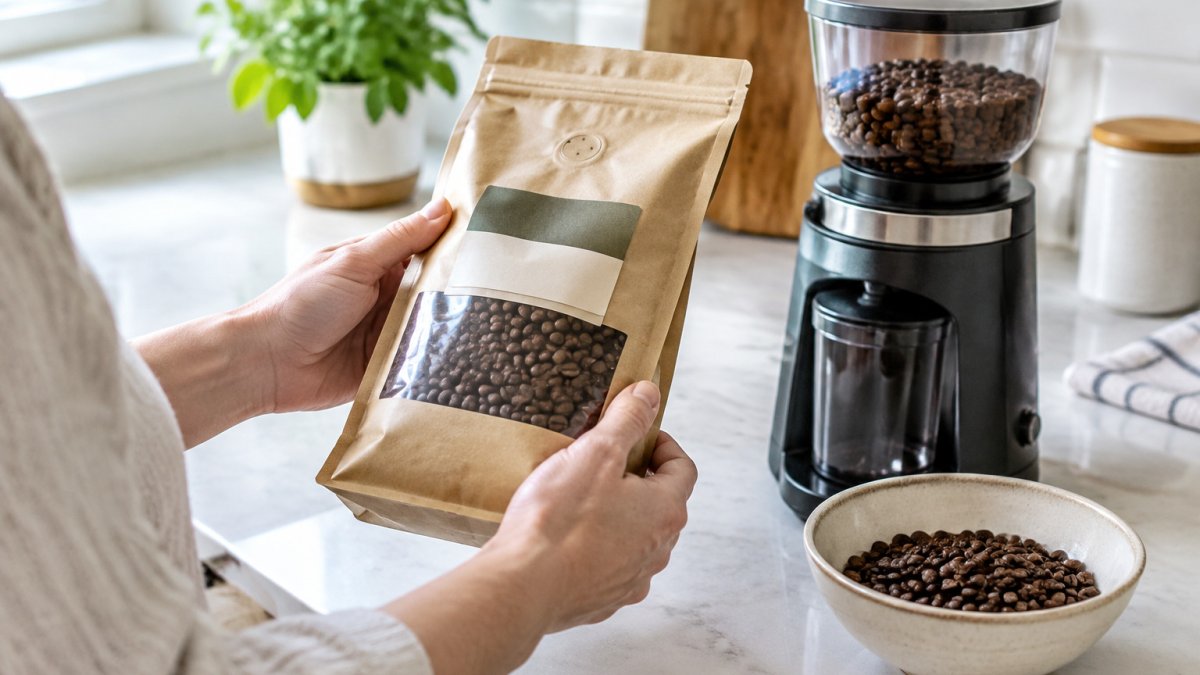
Whole beans keep their flavor longer than ground coffee. Grinding releases aromatics quickly, so grind just before brewing for the best cup. Pre-ground decaf loses flavor faster and is harder to judge.
Look for a roast date on the bag, and buy from a roaster that roasts close to shipping. Our guide to how to choose the freshest coffee beans covers what else to check on a label. We roast each order after it is placed.
Best Decaf Ground Coffee and When Pre-Ground Makes Sense
Pre-ground decaf is convenient for drip machines and for people who brew only occasionally. If you use a drip machine, a medium grind bought recently is a reasonable choice.
For the best flavor, though, buy whole beans and grind at home. A burr grinder gives a more even grind than a blade grinder. If you choose pre-ground coffee, store it in an airtight container away from heat and light, and use it within a few weeks of opening.
Matching Decaf Beans to Your Taste and Brewing Setup
Start by asking what you like in regular coffee. If you like chocolate and caramel, look for decaf with those notes. If you prefer bright, fruity coffee, choose a decaf with citrus or berry notes and a lighter roast.
Match the bean to your brewer:
| Brewing method | Suggested roast | What to look for |
|---|---|---|
| Espresso | Medium | Caramel, chocolate, balanced body |
| Pour-over | Light to medium | Citrus, floral, bright acidity |
| French press | Medium | Full body, sweetness |
| Drip machine | Medium | Smooth, easy-drinking profile |
Taste is personal, so treat these as starting points. Buy a small bag first when trying a new origin.
Booking Your First Decaf Order With Birdy & The Bear
If you are ready to try decaf, start with our Peru Decaf. At $18.99, it is a medium roast with caramel, smooth and citrus notes, decaffeinated with the Swiss Water Process.
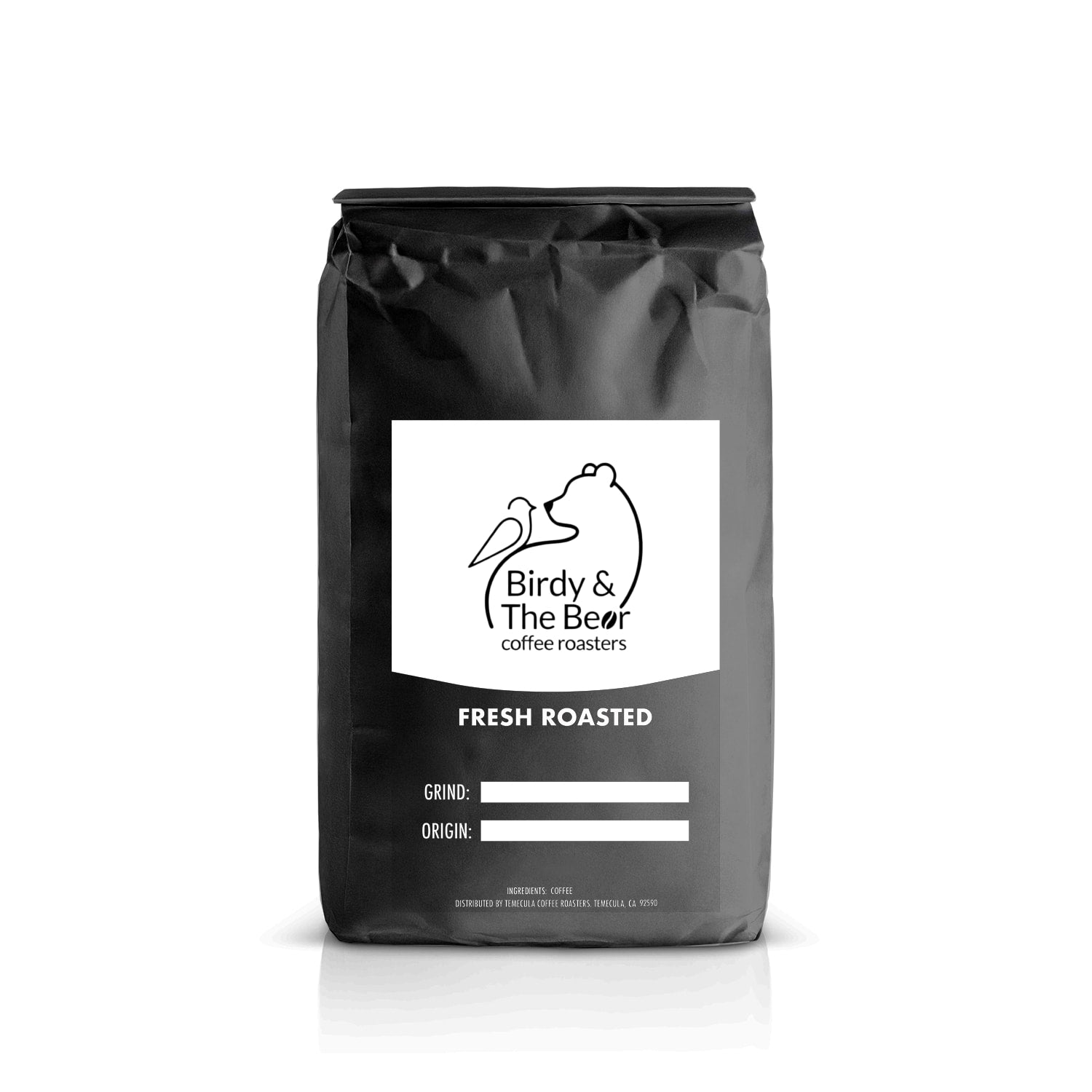
Choose whole bean if you have a grinder, or ground if you brew with a drip machine. Once it arrives, brew it as a pour-over or in a French press to taste the citrus and caramel clearly. Then compare it with your usual coffee and see what you prefer.
Shop Peru Decaf at birdyandthebear.com/products/peru-decaf
Frequently Asked Questions
Which decaf coffee has the least chemicals?
Coffees decaffeinated with the Swiss Water Process, a water-based method that uses no solvents, are generally the most chemical-free option. Solvent-based methods use compounds such as ethyl acetate or methylene chloride to pull caffeine from the beans. Check the bag or product listing for the process used. Peru Decaf from Birdy & The Bear is decaffeinated with the Swiss Water Process, so you can see the method before you buy.
What roast level is best for decaf coffee?
Medium roasts are a strong starting point for decaf because they keep much of the origin's sweetness and body while bringing out caramel notes. Decaf beans can taste flatter than regular coffee, so a medium roast helps them stay balanced. Lighter roasts show more acidity and fruit, while darker roasts can taste heavy or roasty. Peru Decaf is a medium roast with a caramel, smooth and citrus profile, which suits most palates.
How can you tell if decaf coffee beans are fresh?
Look for a roast date on the bag rather than only a best-by date. Beans are at their best within a few weeks of roasting, and freshness fades quickly after that. Whole beans hold their flavor longer than ground coffee, so grind just before brewing. Beans that smell flat, dusty or stale when you open the bag are past their peak. Birdy & The Bear roasts to order.
