

Table of Contents
- Why Fresh Coffee Beans Make a Measurable Difference
- How to Tell If Coffee Beans Are Fresh: The Core Sensory Tests
- Signs of Stale Coffee Beans You Should Know
- Coffee Roast Date vs Expiration Date: What Actually Matters
- How to Store Coffee Beans to Preserve Peak Freshness
- Shelf Life Guidelines for Fresh Coffee Beans
- Knowing Your Fresh Coffee Beans Are Worth the Effort
Last Updated: August 23, 2026
Why Fresh Coffee Beans Make a Measurable Difference
Knowing how to tell if coffee beans are fresh is the single most important skill a home brewer can develop. At Birdy & The Bear Coffee, we've watched countless people upgrade their equipment and still end up with flat, disappointing cups because the beans were stale.
Fresh coffee beans are a chemical reality. Immediately after roasting, beans release carbon dioxide in a process called degassing. That CO2 creates the bloom in your pour-over and protects the bean's volatile aromatic compounds from oxygen exposure. Once degassing slows, oxidation degrades the flavor profile irreversibly.
The difference between a freshly roasted bean and a stale one shows up as hollow body, flat aroma, and papery taste. According to the Specialty Coffee Association's research on coffee freshness and degassing, CO2 release is most active in the first two weeks after roasting, making that window the sweet spot for most brewing methods.
This guide walks through every reliable test, sensory, visual, and physical, so you can assess any bag of beans before brewing.
How to Tell If Coffee Beans Are Fresh: The Core Sensory Tests
The most reliable way to assess freshness is a short sequence of sensory tests that take less than five minutes and require no special equipment.
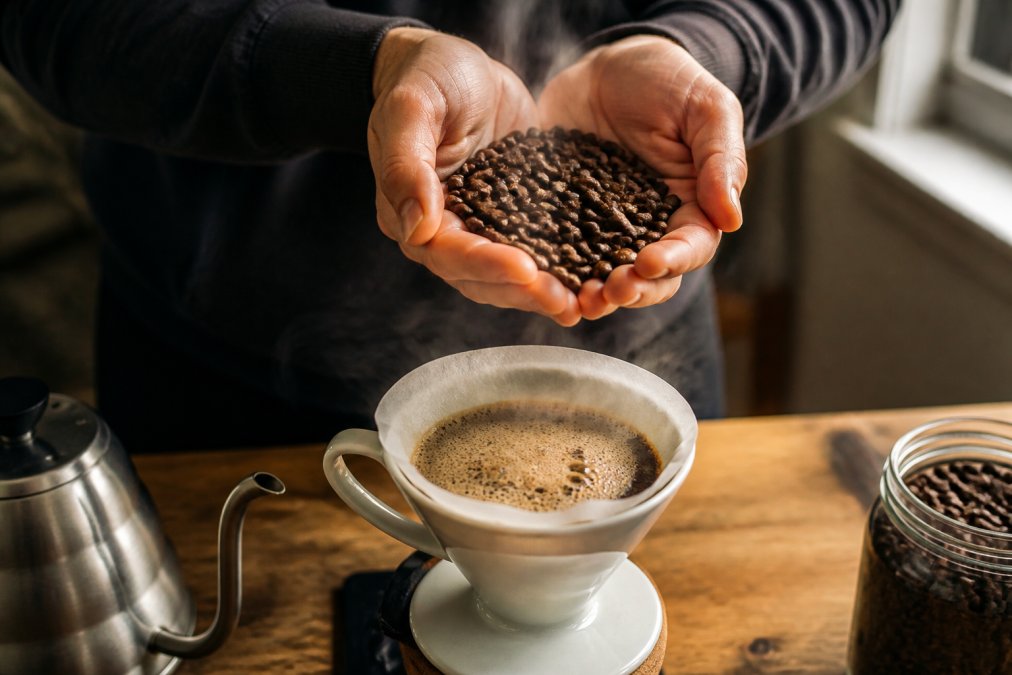
Step 1: Run the Bloom Test
The bloom test is the most definitive indicator of coffee freshness. Add ground coffee to a pour-over or French press, then pour just enough hot water to saturate the grounds, roughly twice the weight of the coffee. Wait 30 to 45 seconds and watch what happens.
Fresh, recently roasted coffee will bloom visibly. The grounds swell, rise, and produce foamy bubbles as trapped CO2 escapes. A vigorous bloom signals that degassing is still active. A weak bloom or none at all tells you the CO2 has already escaped and the beans are stale.
Note: bloom intensity varies by roast level. Dark roast beans degas faster than light roast beans, so factor in your roast level when interpreting the test.
Step 2: Smell the Beans Before You Brew
Open the bag and take a direct sniff before grinding. Fresh beans carry complex, layered aromas, fruit, chocolate, nuts, or florals depending on origin, that hit you immediately. The fragrance should feel alive and specific to that coffee.
Stale beans smell dull, faint, or vaguely musty. If you have to press your nose into the bag to detect anything, the beans are past their peak. Grind a small amount and smell again; grinding releases more volatile compounds. If even freshly ground coffee smells weak, you have your answer.
Step 3: Inspect the Bean Surface
Look at the beans under good light. Fresh beans, particularly medium and dark roasts, develop a natural oily residue on the surface as roasting draws lipids to the exterior. This glossy shine indicates the bean's oils are intact and the cell structure hasn't broken down from oxygen exposure.
Completely matte and dry beans may be very lightly roasted (which is fine) or genuinely old. Excessively greasy, wet-looking beans have often been over-roasted or stored poorly. The sweet spot is a slight sheen without pooling oil.
Step 4: Check the Packaging and One-Way Valve
A one-way valve on a coffee bag allows CO2 from degassing beans to escape without letting oxygen in. If a bag has no valve, the roaster either packed the coffee well after roasting or cut corners.
Press the bag gently to force air through the valve and smell what comes out. Fresh beans will push a strong, pleasant aroma through. Vacuum-sealed bags that collapse flat indicate the coffee was packed long after roasting. Always cross-reference with the roast date.
Signs of Stale Coffee Beans You Should Know
Stale coffee beans give themselves away through multiple channels.
Taste Profiles That Signal a Stale Batch
Freshly roasted coffee has bright, clean acidity, a body that coats the palate, and lingering finish notes. Stale coffee loses these qualities predictably: first the acidity flattens, then the body becomes hollow and watery, and finally a papery taste or thin bitterness takes over.
If your espresso shots taste sour or refuse to pull consistently despite correct grind settings, stale beans are often the culprit. Oxidized beans become brittle and fracture unevenly, producing inconsistent particle size that wrecks extraction.
Troubleshooting Stale Coffee at Home
If you suspect your beans are stale, a few adjustments can recover some cup quality, though they won't restore what oxidation has removed.
Grind finer. Stale beans extract more slowly because their cell structure has degraded. A finer grind increases surface area and helps pull more flavor from what remains.
Brew hotter. Use water at the higher end of the standard 195-205°F range recommended by the National Coffee Association's brewing guidelines.
Use a shorter bloom time. If the bloom is weak, a 15-second bloom is enough. Waiting longer just cools the water.
Accept the loss. Stale coffee has a ceiling. These adjustments help, but flavor compounds lost to oxidation are gone. Fresher beans are always the better investment.
Coffee Roast Date vs Expiration Date: What Actually Matters
The roast date is the only date that matters on a bag of coffee. An expiration date tells you when a product is considered safe to consume, not when it tastes good. Coffee rarely becomes unsafe within any reasonable home storage window; it becomes flavorless.
Roast date is when the green beans were roasted. This is your freshness clock. Most specialty roasters consider coffee at its best between 5 and 21 days after roasting for espresso, and 7 to 14 days for filter methods.
Expiration date is a regulatory compliance marker reflecting shelf stability for packaging, not peak flavor. A bag might show an expiration date 12 months out while the coffee became stale at the 6-week mark.
If a bag shows no roast date, only an expiration date, treat that as a red flag. Specialty roasters display roast dates prominently because they're proud of them.
How Origin and Altitude Affect Perceived Freshness
Coffee grown at high altitude, typically above 1,500 meters, develops denser bean structure due to slower cherry maturation in cooler temperatures. Denser beans degas more slowly and hold their flavor compounds longer than lower-altitude beans.
A high-altitude Ethiopian or Colombian single origin may taste vibrant at 25 days post-roast, while a lower-altitude blend might feel flat at 18 days. Origin also shapes what "fresh" smells like. A fresh Kenyan bean has sharp, wine-like acidity; a fresh Sumatran bean smells earthy and full-bodied. Knowing your origin helps calibrate the aroma test.
According to research on coffee bean density and altitude from the Coffee Quality Institute, altitude is one of the primary determinants of bean density, which directly influences post-roast shelf behavior.
How to Store Coffee Beans to Preserve Peak Freshness
Proper storage is where most people undermine the freshness they paid for. The four enemies of fresh coffee beans are oxygen, moisture, light, and heat.
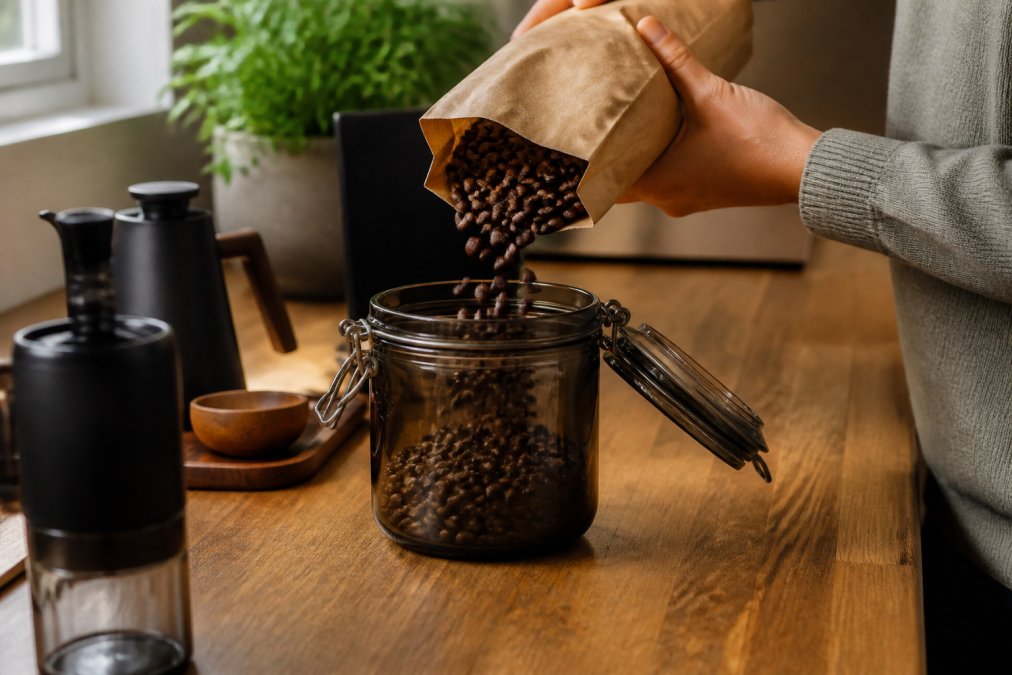
The best storage solution is an airtight container kept in a cool, dark location away from the stove and windows. Opaque ceramic or dark glass canisters with compression lids outperform clear glass jars. Avoid storing beans in the refrigerator; temperature cycling and moisture from condensation accelerate oxidation.
Buy in quantities you'll consume within two to three weeks. Smaller, fresher bags beat larger, older ones every time.
How Humidity and Temperature Accelerate Staleness
Humidity is the underappreciated accelerant in coffee degradation. When moisture contacts roasted coffee, it triggers hydrolysis, a chemical reaction that breaks down aromatic compounds. Even brief exposure can noticeably flatten a bean's aroma within days.
Temperature swings are equally damaging. Beans stored near an oven experience repeated heating and cooling cycles that expand and contract the bean's porous structure, allowing oxygen to penetrate more deeply.
Store beans at a consistent room temperature between 60 and 75°F, in a sealed container, away from heat sources or direct light. In high-humidity climates, add a food-safe silica desiccant packet to your storage container.
Storage Factor |
Risk Level |
Best Practice |
|---|---|---|
Oxygen exposure |
High |
Airtight container, minimize opening frequency |
Humidity |
High |
Desiccant packet in humid climates, never refrigerate |
Light exposure |
Medium |
Opaque or dark container, away from windows |
Heat and temperature swings |
High |
Away from stove, consistent room temperature |
Freezing whole beans |
Low (if done correctly) |
Freeze once in airtight bag, thaw fully before opening |
Shelf Life Guidelines for Fresh Coffee Beans
Shelf life depends on roast level, storage conditions, and whether beans are whole or ground. Whole beans preserve flavor significantly longer than pre-ground coffee because grinding dramatically increases surface area exposed to oxygen.
General shelf life windows for whole bean coffee:
- Peak flavor window: 7 to 21 days after roast date (varies by roast level and brewing method)
- Acceptable quality: Up to 4 to 6 weeks post-roast, with noticeable decline after week 3
- Technically drinkable: Up to 6 months in proper airtight storage, though flavor is significantly diminished
- Pre-ground coffee: Peak flavor within 1 to 2 weeks; staleness sets in rapidly after grinding
Dark roast beans degas and oxidize faster than light roast beans due to more porous cell structure from longer roasting. A light roast stored correctly holds its flavor longer than a dark roast under identical conditions.
Espresso typically benefits from a 7 to 10 day rest before brewing, allowing enough CO2 to dissipate for stable shots. Filter coffee can often be brewed as early as 3 to 5 days post-roast. Brewing too soon causes channeling and uneven extraction, producing sour flavor despite perfectly fresh beans.
As outlined in food science guidance on coffee oxidation and shelf life from the Institute of Food Technologists, oxidative degradation accelerates significantly once the protective CO2 layer dissipates, underscoring why the roast date window is the critical variable.
Knowing Your Fresh Coffee Beans Are Worth the Effort
Running these tests takes five minutes. The payoff is every cup you brew afterward tasting the way the roaster intended. Fresh coffee beans with intact aroma, active degassing, and a visible bloom aren't a luxury; they're the baseline for a genuinely good cup.
Source your beans from roasters who display roast dates, buy in two-week quantities, store properly, and trust your senses. The bloom test, aroma check, and surface inspection are all the equipment you need to evaluate freshness accurately.
Birdy & The Bear Coffee roasts every order only after it's placed, which means the beans arrive in their active degassing window. Whether you prefer whole bean, ground, or pods, the roast date is never a mystery. Shop now and experience the difference that genuine freshness makes in your daily cup.
Frequently Asked Questions
Do coffee beans have an expiration date?
Coffee beans rarely carry a true expiration date. Most bags list a 'best by' date, which reflects peak flavor rather than food safety. Fresh coffee beans are best consumed within 2 to 4 weeks of the roast date for whole bean, or within 1 to 2 weeks if pre-ground. The roast date is the number that actually matters. A bag with a distant best-by date but no roast date printed on it gives you almost no useful information about freshness.
How can you tell if coffee beans have gone rancid?
Rancid coffee beans smell flat, musty, or faintly like cardboard or old cooking oil. Fresh beans carry a bright, complex aroma even before brewing. When brewed, rancid beans produce a hollow, papery taste with little acidity and a dull, bitter finish. Running a quick bloom test also reveals the difference: fresh beans release vigorous foamy bubbles from carbon dioxide off-gassing, while stale or rancid beans produce little to no bloom at all.
How long does coffee stay fresh after it's ground?
Ground coffee loses freshness far faster than whole beans. Once ground, coffee begins oxidizing immediately, and most of its aroma and flavor profile degrades within 15 to 30 minutes at room temperature. For brewing at home, grind only what you need right before brewing. If you must store ground coffee, keep it in an airtight container away from light, heat, and moisture, and aim to use it within one week for the best results.
You say beans are roasted after ordering — won't they need more time to degas before I brew?
Freshly roasted beans do need a short resting period to release excess carbon dioxide before brewing. For most brewing methods, 3 to 7 days post-roast is ideal. Espresso often benefits from up to 10 to 14 days. When your beans arrive shortly after roasting, simply let them rest in the sealed bag with the one-way valve intact for a few days before opening. That brief wait produces noticeably more consistent extraction and a fuller flavor profile.
This article was written using GrandRanker