

Quick Summary
Single origin ground coffee is ground coffee made from beans grown in one specific place, such as a single country, region, farm or cooperative, so its flavor reflects that origin. To choose a good bag, check for a specific origin on the label, a clear roast date, and a grind that matches your brewer.
- Good single origin bags name the country and often the region, altitude or grower.
- Check the roast date rather than relying only on a best-by date.
- Use an airtight container away from heat and light, and use opened ground coffee within a few weeks.
- Match the grind to your brewer: medium for drip, coarse for French press, fine for espresso.
- Compare price per ounce rather than sticker price, since smaller packs usually cost more per ounce.
Table of Contents
- What Single Origin Ground Coffee Actually Means
- Single Origin vs Blend: How to Choose Between Them
- How Origin, Variety and Processing Shape the Cup
- Checking Freshness and Roast Date on Ground Coffee
- Matching Grind Size to Your Brewer, Including Single Origin Drip Coffee
- Reading Origin Labels and Comparing Single Origin Coffee Brands
- Where to Buy Single Origin Ground Coffee and What to Pay
- Pick Your First Bag: Start With the Single Origin Favorites Sample Pack
- Frequently Asked Questions
What Single Origin Ground Coffee Actually Means
Single origin ground coffee is coffee made from beans grown in one specific place, such as a single country, region, farm or cooperative, and then ground for brewing. Beans from different growers are not mixed in, so the flavor reflects that one origin. At Birdy & The Bear Coffee, our Single Origin Favorites Sample Pack lets you taste several origins side by side before you commit to a full bag.

The label is the first clue. A good single origin bag names the country and often the region, altitude or grower. Vague wording like "premium Latin blend" usually means the beans came from several sources.
Single Origin vs Blend: How to Choose Between Them
A single origin coffee is built around one origin's character. A blend combines beans from several origins, often to create a consistent flavor year after year. Neither is wrong, and many coffee drinkers keep both on hand.
Choose single origin if you want to explore: a bright Ethiopia can taste of jasmine and fruit, while a Colombia often runs toward chocolate and dried orange. Choose a blend if you want the same reliable cup every morning.
A simple test works well. Buy one single origin and one blend in small sizes, brew them the same way, and note which one you reach for on a weekday morning.
How Origin, Variety and Processing Shape the Cup
Three factors shape flavor more than most shoppers expect. Origin sets the baseline through soil, altitude and climate. Variety, the botanical type of coffee plant, adds its own character. Processing, the way the cherry is removed from the bean, affects sweetness and body.
Washed coffees tend to taste cleaner and brighter. Natural processed coffees usually taste fruitier and heavier. Our Ethiopia Natural, for example, is full natural processed and sorted by hand, which is why it tastes of milk chocolate and fruit.
You don't need to memorize these terms. Read the processing note on the bag and match it to the tasting notes you enjoy.
Checking Freshness and Roast Date on Ground Coffee
Ground coffee loses aroma faster than whole beans because more surface area meets the air. Check the roast date first. Look for a clear roast date rather than only a best-by date, since the roast date tells you how old the coffee actually is.
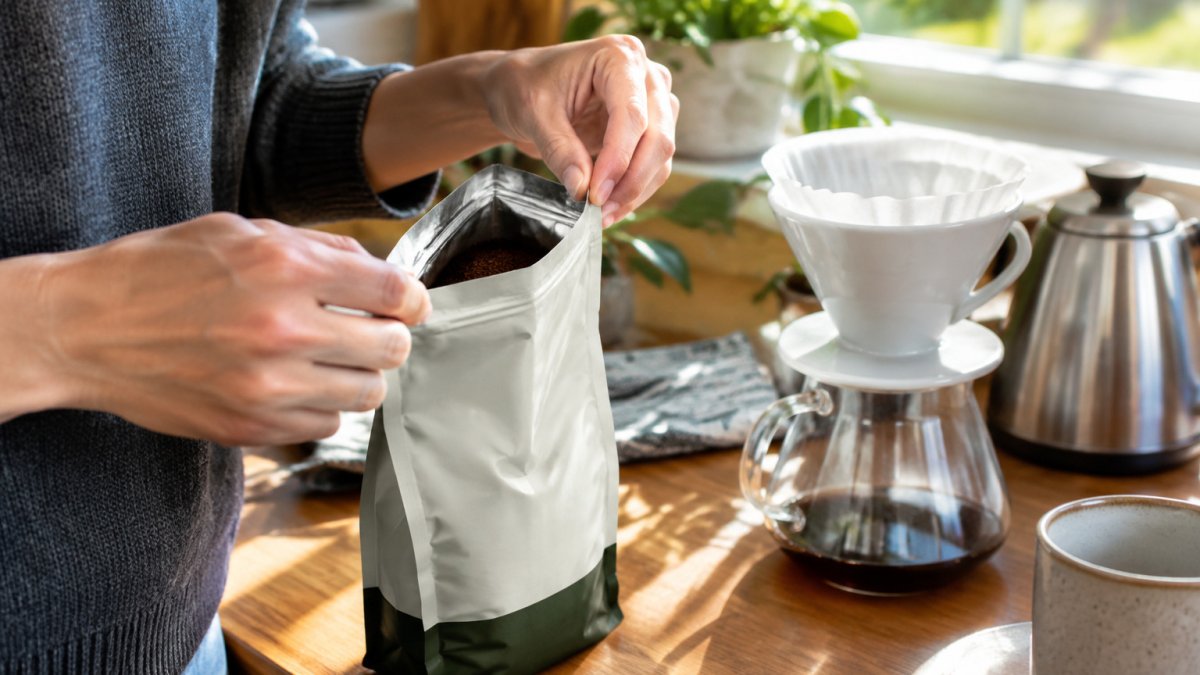
Store ground coffee in an airtight container away from heat and light. Once opened, use it within a few weeks for the best flavor. Our guide to How to Properly Store Ground Coffee to Keep It Fresh covers storage in detail.
Freshness also depends on when the beans were roasted. Coffee roasted to order is roasted only after the order is placed. For a closer look at reading the date, see How Do You Choose the Best Roast Date for Coffee?
Matching Grind Size to Your Brewer, Including Single Origin Drip Coffee
Grind size controls how quickly water extracts flavor, and with pre-ground single origin coffee you usually get one fixed grind per bag. That makes matching the bag to your brewer the single most important buying decision after origin and roast date. Most practitioners group grinds into four practical bands, and each band behaves differently in the cup.
| Brewer | Grind texture | Typical brew time | What goes wrong |
|---|---|---|---|
| Drip machine | Medium, like table salt | 4-6 minutes | Too fine clogs the filter and tastes bitter; too coarse tastes weak and sour |
| Pour-over (cone) | Medium-fine, like fine sand | 2.5-4 minutes | Too coarse drains fast and tastes thin; too fine stalls the bed |
| French press | Coarse, like sea salt | 4 minutes steep | Too fine slips through the mesh and leaves sludge |
| Espresso | Fine, like powdered sugar | 25-30 seconds | Pre-ground espresso is nearly impossible to dial in because dose and grind interact |
For drip brewing, choose a medium grind and a bright or balanced origin. Ethiopia and Kenya, which tend to be brighter and more floral, reward a slightly coarser medium grind because over-extraction turns their fruit notes bitter.
Because pre-ground coffee locks in one grind, buy the bag that matches your main brewer rather than trying to stretch one bag across every method. If you brew both drip and French press, buy two small bags ground for each rather than one bag you use for both. A medium grind run through a French press will slip past the mesh; a coarse grind in a drip machine will taste thin no matter how good the beans are.
Watch out: a bag labeled simply "drip grind" may be cut finer or coarser than your machine needs, so if the first pot tastes sour or flat, adjust brew ratio and water temperature before blaming the coffee. For a deeper look at grinding mechanics, read How to Grind Coffee Beans for Espresso Machines: A 2026 Guide, and for bean selection by brewer see How to Choose Coffee Beans for an Automatic Drip Machine.
Reading Origin Labels and Comparing Single Origin Coffee Brands
Origin labels are not created equal, and the word "single origin" itself covers a wide range of specificity. A useful way to read a bag is to place it on a traceability ladder, from broadest to most specific:
- Country only, "Colombia" or "Ethiopia." This is the weakest claim; beans may come from hundreds of farms across a large growing area.
- Region, "Huila" in Colombia or "Yirgacheffe" in Ethiopia. Region-level labels narrow the source meaningfully and often correlate with recognizable flavor profiles.
- Farm or cooperative, a named estate, washing station, or cooperative. This is where traceability becomes verifiable, because the producer can be identified.
- Lot, a specific harvest or separation from one farm or station. Lot-level coffees are the most traceable and usually the most expensive.
- Producer, the individual farmer or group named on the bag, sometimes with altitude and processing detail.
A strong label stacks several of these: country, region, producer, altitude, variety, and processing method. A weak label stops at the country or uses vague wording like "premium Latin blend," which usually signals beans from several sources. The more specific the label, the easier it is to verify and compare.
When comparing single origin coffee brands, line up the same details on each bag: origin specificity, roast level, processing, tasting notes, roast date, and net weight. Then compare price per ounce rather than sticker price. Divide the bag price by its ounce count; a 12 oz bag at $18.99 works out to about $1.58 per ounce, while a 2 oz sample at $4.17 is roughly $2.09 per ounce. Smaller packs almost always cost more per ounce, so use them to compare flavor, not to judge value.
Be skeptical of tasting notes that list everything. Two or three clear notes, such as "cocoa, orange and caramel," are more useful than a long list, and they should line up with the processing method: a washed coffee described as "fruity and heavy-bodied" is a mismatch worth questioning.
A roast date is more useful than a best-by date when judging freshness. The Single Origin Favorites Sample Pack includes six 2 oz packs for $24.99, a way to compare origins before committing to a full bag.
Where to Buy Single Origin Ground Coffee and What to Pay
You can buy single origin ground coffee from roasters, grocery stores and online shops.
Single origin bags from Birdy & The Bear Coffee are listed at specific prices on each product page. Prices elsewhere vary by brand and size, so compare price per ounce rather than sticker price alone.
Value depends on how fresh the coffee is when you brew it. A cheaper bag with an old roast date can taste worse than a fresher bag that costs a little more.
Pick Your First Bag: Start With the Single Origin Favorites Sample Pack
If you have never bought single origin coffee, start small. The Single Origin Favorites Sample Pack includes six 2oz packs, including Brazil Santos, Colombia, Costa Rica, Ethiopia, Honduras and Tanzania, for $24.99. Each pack lists its roast level, tasting profile and growing details, so you can see how origin shapes the cup.
Brew each sample the same way, one at a time, and write down which tastes you like. Once you know your preferences, move to a full bag of the origin you enjoyed most.
Frequently Asked Questions
What does single-origin coffee mean?
Single-origin coffee comes from one specific place rather than a mix of beans from several regions. That place can be a country, a region within a country, a single farm, or a single cooperative. Because the beans share a growing area, altitude, soil and processing method, the cup tends to taste more distinct and traceable. A single origin label tells you where the beans grew, but it does not guarantee a particular roast or flavor, so check the roast level and tasting notes as well.
How can I tell if ground coffee is fresh?
Look for a roast date printed on the bag, not just a best-by date. Ground coffee loses aroma quickly because grinding exposes far more surface area to oxygen. Most ground coffee tastes best within a few weeks of roasting. Check that the coffee smells sweet and fragrant when you open it. Flat, papery or stale smells mean the coffee has lost much of its character.
Which grind size should I choose for my coffee maker?
Match the grind to your brewer. Drip machines and pour-over cones work best with a medium grind, similar to coarse sand. French press needs a coarse grind to avoid over-extraction and sediment. Espresso requires a fine grind. If your ground coffee is the wrong size, the cup will taste either sour and thin or harsh and bitter. Check the label before you brew.
How long does ground coffee stay fresh after opening?
Once opened, ground coffee is best used within about one to two weeks for the most vivid flavor, though it remains drinkable for longer. Store it in an airtight container away from heat, light and moisture. Avoid the refrigerator, since condensation can damage it. Buying smaller bags reduces waste and keeps each cup closer to peak freshness.
