

Last Updated: November 4, 2026
Quick Summary
The best coffee blends for milk based drinks are balanced blends rather than single origins, because milk softens acidity and adds sweetness and body. Medium blends suit sweet, balanced lattes, while dark blends suit bold, chocolate-forward drinks that hold up under milk.
- Milk softens acidity, adds sweetness and carries fat that coats the palate.
- Blends give consistency because a single farm's crop can shift in flavor from year to year.
- Keep steamed milk between 140 and 155°F to avoid a flat, cooked taste.
- Pull standard double shots in 25 to 30 seconds to avoid harsh bitterness.
- Medium roasts keep sweetness and origin character, while dark roasts keep body in milk.
Table of Contents
- How Milk Changes the Way Coffee Tastes
- Best Espresso for Milk Drinks: Our Top Blend Picks
- Medium vs Dark Roast for Lattes: Which Should You Choose?
- How to Steam Milk for Latte Art at Home
- Pick Your Blend and Brew Your First Latte This Week
- Frequently Asked Questions
Choosing the best coffee blends for milk based drinks comes down to one practical question: what happens when your espresso meets steamed milk? At Birdy & The Bear Coffee, we roast every order only after it is placed. Blends are often a practical choice for milk drinks because they are balanced to combine several beans.
Single origins shine in black coffee, where you can taste the farm, the altitude and the processing method. Milk is a different story. It softens acidity, adds sweetness and carries fat that coats the palate.
Blends can also offer consistency, since harvests vary from year to year and a single farm's crop can shift in flavor.
Watch out: a dark, heavily roasted blend can taste bitter if your shot runs too long, so dial in your grind before you blame the beans.
How Milk Changes the Way Coffee Tastes
Milk is not a neutral diluent. It is an active ingredient that chemically binds, coats and sweetens espresso, and understanding the mechanism explains why the same blend can taste sweet in a cappuccino and flat in a latte. For a side-by-side breakdown, read the Single Origin vs Coffee Blends guide.
Sweetness comes from lactose and heat. Lactose is a disaccharide naturally present in dairy milk at roughly 4.5 to 5 percent by weight. It is only mildly sweet on its own, but steaming concentrates it slightly through evaporation and, more importantly, heat rearranges the milk proteins so the sweetness reads more clearly on the palate. This is why a chocolate or caramel note in a blend often jumps forward in a latte but disappears in a cold brew with a splash of milk.
Proteins and fat build body. Casein and whey proteins make up about 3.3 percent of whole milk by weight, and milk fat adds another 3.25 to 3.5 percent. When you steam milk, the whey proteins unfold (denature) around 140°F and begin to form the fine bubble network we call microfoam. That protein-fat matrix is what coats the tongue and makes a medium-body espresso feel fuller. A blend with a thin body in a straight shot can feel plush in a flat white because the milk is doing the body work.
Milk mutes acidity by buffering it. Coffee acids, citric, malic, chlorogenic, read as brightness in black coffee. Milk proteins bind some of those acids and the fat coats taste receptors, so a blend that tastes brisk as espresso can taste soft and rounded with milk. The practical takeaway: a blend with very high perceived acidity (think a light-roasted Kenyan single origin) often tastes sour or thin once milk is added, while a blend with chocolate and nut notes keeps its identity.
Temperature is a hard threshold. Milk steamed above roughly 160°F can taste flat and slightly cooked. A common target range is 140 to 155°F.
Bitterness becomes more obvious as the drink cools. Cold liquids suppress sweetness perception and let roasted bitterness read more strongly. A dark roast that tastes balanced at 150°F can taste harsh at 110°F, which is why keeping shots short (25 to 30 seconds for a standard double) and milk smooth matters more than chasing a darker roast for "strength."
Watch out: if your latte tastes sour rather than bitter, the problem is usually under-extraction or a blend with too much bright acidity for milk, not the milk itself.
Best Espresso for Milk Drinks: Our Top Blend Picks
If you want a short answer, start with the 6 Bean Blend. It is a dark roast house blend made for espresso. At $18.99, it is available as a 12-ounce bag. The blend combines beans from around the world.

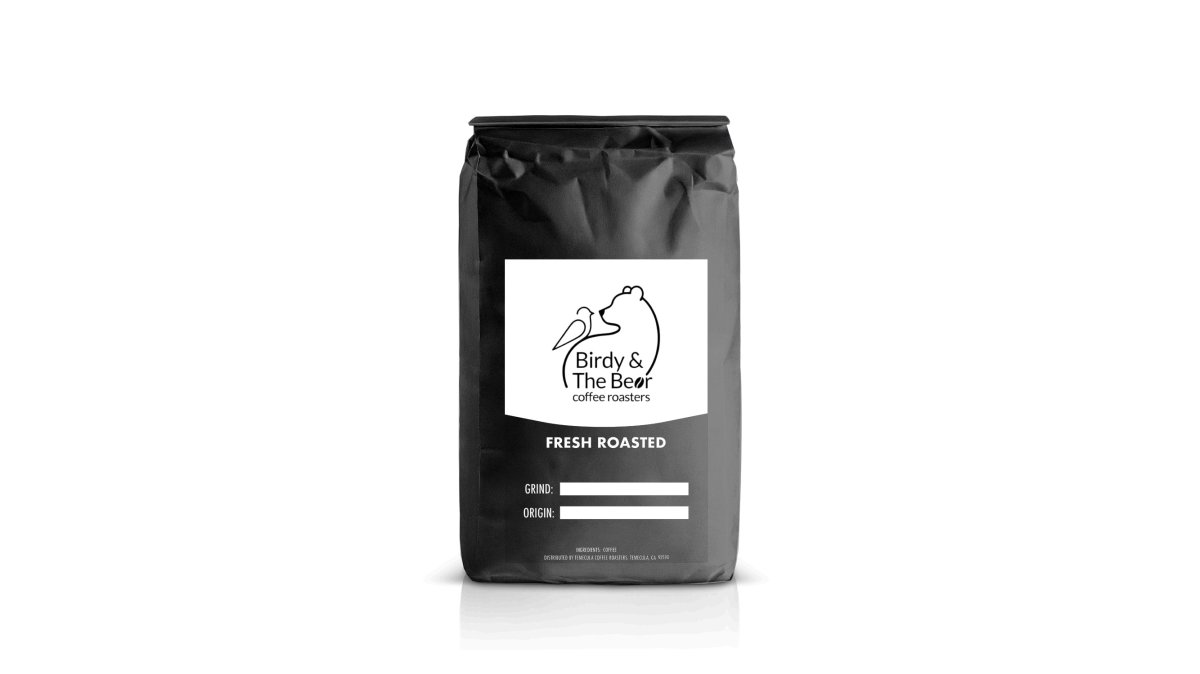
Your best choice depends on the flavor you want in your cup. We group our blends into two styles below, so you can match your taste to the right bag.
Dark Blends for Bold, Chocolate-Forward Lattes
Dark blends work well when you want a strong, rich cup that holds up under milk. The Italian Roast is our darkest option, a slow-roasted blend of specialty grade Arabica and Robusta. For a little more complexity, try the Cowboy Blend, which mixes dark and medium roasted coffee with cocoa, caramel and vanilla tones.

Medium and Sweet Blends for Smooth, Balanced Cups
If you prefer a softer, sweeter latte, look at the medium blends. The House Blend is a medium roast from Central and South America, with nutty, sweet chocolate notes and a clean, bright finish. You can also buy the Breakfast Blend Plus if you want a smooth, balanced milk-drink blend with extra caffeine. The Latin American Blend is a medium-dark roast with nutty hints, mild fruity tones and a gentle cocoa aftertaste. For a sweeter cup still, the Blonde is a sweet blend from Central America and Africa, made for sweet espresso drinks.

The African Kahawa Blend and African Espresso bring a different character. The African Kahawa Blend offers toffee, caramel, chocolate and red fruit notes. The African Espresso is a medium-dark blend of coffee from Kenya, Tanzania and Ethiopia.
Medium vs Dark Roast for Lattes: Which Should You Choose?
Roast level influences how the bean's flavor comes through in milk. Medium roasts keep more fruity and acidic character, while dark roasts emphasize chocolate and roasted notes. That single difference drives every practical choice below.
Choose medium if you want origin character and sweetness. A medium roast keeps caramel, nut and dried-fruit notes that read as sweetness in a latte. It also retains enough acidity to keep the drink from tasting flat. The trade-off is that a medium roast is less forgiving: an under-extracted shot tastes sour, and the milk will not hide it.
Choose dark if you want body and a flavor that survives milk. The trade-off is bitterness: a dark roast pulled too long tastes ashy, and the roasted notes can overwhelm delicate syrups.
Match the roast to how you drink it. If you add sugar or flavored syrup, dark roast holds its identity against the sweetness. If you drink a plain flat white or cortado and want to taste the coffee, medium gives you more to taste. A common pattern among daily milk-drinkers is medium roast for the morning latte and dark roast for an afternoon mocha.
**
Weigh cost per cup, not cost per bag. A 12-ounce bag at $18.99 yields roughly 24 double shots at an 18-gram dose, or about $0.79 per shot before milk. A budget blend at $12 for 12 ounces works out to about $0.50 per shot. For a daily latte drinker, the difference is roughly $100 a year, worth knowing before you assume premium beans are a splurge. The practical middle ground is a premium blend for weekend pour-overs and a solid medium or dark blend for the weekday latte, where milk and syrup mask subtle origin differences anyway.
The table below sums up how each roast level behaves once milk is added.
| Roast | Flavor in milk | Watch for |
|---|---|---|
| Medium | Origin character and sweetness | Sour if under-extracted |
| Dark | Body and flavor that survives milk | Bitterness if pulled too long |
| Premium blend | About $0.79 per shot | Roughly $100 more per year |
| Budget blend | About $0.50 per shot | Less body in some cases |
How to Steam Milk for Latte Art at Home
Good latte art starts with well-textured milk. Use cold whole milk, fill your pitcher to about a third, and place the steam wand just below the surface to create a gentle hissing sound. Once the milk begins to expand, lower the pitcher slightly so the wand creates a whirlpool. Stop when the pitcher feels warm to the touch, around 140 to 160°F. This creates microfoam, the smooth, glossy milk that pours cleanly.
Tap the pitcher on the counter and swirl it to remove large bubbles. Pour slowly from a small height at first, then move closer to the surface as the design forms. A common mistake is steaming too hot, which burns the milk and kills the sweetness. Practice with cheap milk until you get a consistent texture.
Pick Your Blend and Brew Your First Latte This Week
Start with one blend and make the same drink for a week. If you want a bold, chocolate-forward cup, try the 6 Bean Blend or Cowboy Blend. If you prefer something smooth and sweet, try the House Blend or Blonde. Keep your grind and dose consistent so you can taste the differences clearly.
Once you know what you like, shop the full collection at Birdy & The Bear Coffee and roast-to-order your next bag. Shop Now.
Frequently Asked Questions
What roast profile is best for milk-based espresso drinks?
Medium-dark and dark roasts are the most reliable choice for lattes and cappuccinos. Their deeper caramel and cocoa notes hold up against milk, while a lighter roast can taste thin or sour once diluted. Medium roasts work well if you want more brightness and fruit. Dark blends such as Italian Roast and 6 Bean Blend are dark roast options, while Cowboy Blend offers a mix of medium and dark roasts.
Why do some coffee beans taste better with milk than others?
Milk contains proteins and natural sugars that interact with coffee compounds. Coffees with heavy body, chocolate, and caramel notes tend to stay rich and sweet in milk. Highly acidic, floral single origins can taste sharp or hollow once milk is added.
Should I use single-origin or blends for lattes?
Blends are a common choice for milk drinks, and single origins are often enjoyed in black coffee and pour-over, where their individual flavors are easier to taste. House Blend and Latin American Blend are medium and medium-dark options from our collection.
What is the best grind size for milk-based coffee drinks?
Espresso grind is finer than table salt and should be adjusted so a double shot pulls in roughly 25 to 30 seconds. If the shot runs too fast, grind finer. If it takes longer than about 35 seconds, grind coarser. Because milk dilutes flavor, a well-extracted shot with good sweetness and body matters more for lattes than for straight espresso.
