

Table of Contents
- What Is Single Origin Coffee?
- What Is a Coffee Blend?
- Single Origin vs Coffee Blends: Key Differences at a Glance
- Single Origin vs Blend for Espresso: Which Pulls Better?
- Best Brewing Methods for Single Origin Coffee
- How to Identify Specialty Coffee Quality Before You Buy
- Which Should You Choose? A Decision Framework
- Conclusion
Last Updated: August 25, 2026
What Is Single Origin Coffee?
Single origin coffee is sourced from a single geographic location, one country, region, farm, or specific lot. The term signals traceability: you know exactly where the beans came from and how they were processed. At Birdy & The Bear Coffee, we source every single origin directly from named growers, so the story on the bag is the actual story in your cup.
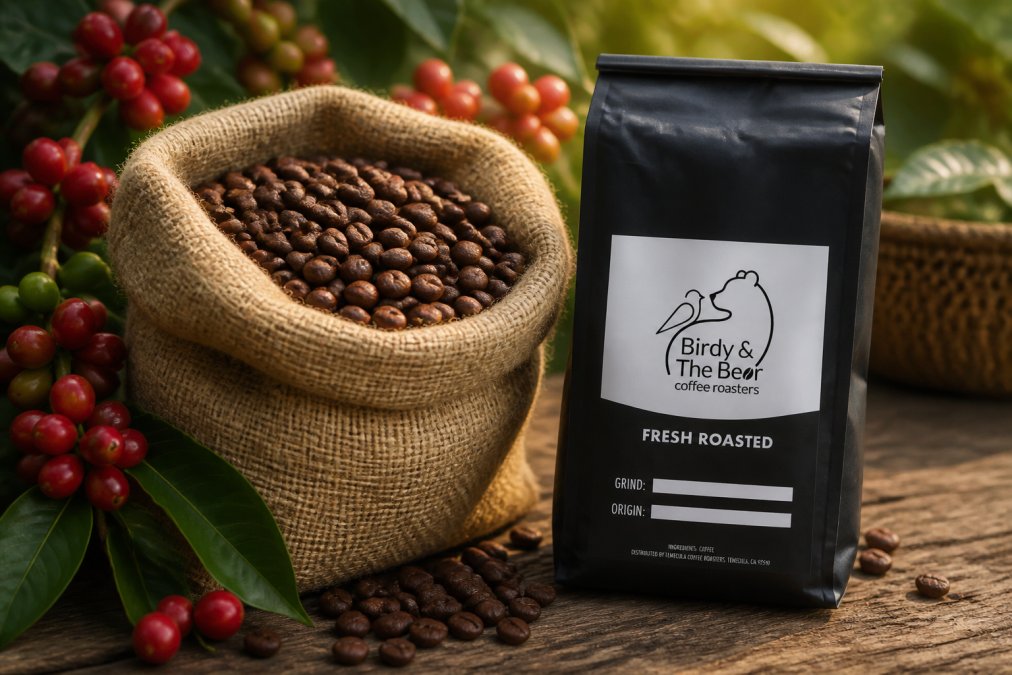
What makes single origin coffee genuinely interesting is how much the cup reflects its environment. Altitude, soil type, rainfall, and varietal all shape the flavor in ways a blend can't replicate. This is terroir, the same concept wine drinkers talk about, applied to coffee. A bean grown at 1,700 meters on nitisol soil in Ethiopia's Sidama Zone will taste fundamentally different from one grown at 750 meters on volcanic loam in Brazil's Paraná region.
The Specialty Coffee Association defines specialty-grade coffee as scoring 80 points or above on a 100-point cupping scale, evaluating flavor notes, acidity, body, mouthfeel, sweetness, and balance. Specialty Coffee Association grading standards Most single origin coffees worth buying fall into this tier.
Terroir, Altitude, and Processing Method
Altitude is one of the biggest levers in flavor development. Higher elevations mean cooler temperatures, slower cherry maturation, and denser beans with more complex flavor compounds. Our Ethiopia Natural, grown at 1,700-1,900 meters in the Sidama Zone, develops distinctive milk chocolate, fruity, and caramel notes precisely because of that elevation and the full natural process, coffee cherries dried whole on raised beds, letting the fruit's sugars absorb into the bean.
Processing method shapes the cup just as dramatically. The three main approaches are:
- Washed process: The coffee cherry is removed before drying, producing cleaner, brighter acidity with more distinct flavor nuance. Our Colombia from Medellín uses this method, yielding dried orange, berry, and chocolate notes.
- Natural process: Cherries dry whole, adding sweetness and fruity complexity. Ethiopia Natural is the clearest example.
- Honey process: A middle path, partial fruit left on during drying, balancing sweetness and clarity. Our Costa Rica uses an eco-pulped variation, which explains that sweet apple and raisin character.
The varietal matters too. Heirloom cultivars from Ethiopia behave differently from Bourbon and Catuai from Central America.
What Is a Coffee Blend?
A coffee blend combines beans from two or more origins, roasted together or separately and then mixed to achieve a specific flavor profile. Blends are designed for consistency, balance, and approachability rather than the expressive singularity of a single origin.
The best blends aren't random combinations. Skilled roasters build them intentionally, selecting origins that complement each other's weaknesses. A bright, acidic Ethiopian might be paired with a low-acid, full-body Brazilian to produce something smooth and balanced.
How Roasters Build Consistency Through Batch Roasting
Batch roasting, roasting each component separately before blending, gives roasters precise control over extraction behavior. A denser, high-altitude bean needs more heat and time than a lower-grown, softer bean. Roasting them separately lets each origin reach its peak.
Our 6 Bean Blend is a dark roast house blend drawing from multiple origins worldwide, calibrated for espresso. The goal is a cup that performs the same way every morning, no surprises, no seasonal drift. This is also where blends have a structural advantage over single origins for commercial use: a roaster can swap one component for another when a harvest underperforms, maintaining the target flavor profile without the customer ever noticing.
Single Origin vs Coffee Blends: Key Differences at a Glance
Neither single origin coffee nor blends are objectively superior. The right choice depends on what you're optimizing for.
Attribute |
Single Origin |
Coffee Blend |
|---|---|---|
Flavor character |
Distinct, terroir-driven |
Balanced, designed |
Consistency |
Varies by harvest season |
Stable year-round |
Complexity |
High, regional nuance |
Moderate, intentional balance |
Traceability |
Full, named farm/region |
Partial, component origins vary |
Espresso performance |
Variable, requires dialing in |
Predictable, designed for it |
Best brew method |
Pour-over, Chemex, AeroPress |
Espresso, drip, French press |
Seasonal availability |
Limited, harvest-dependent |
Continuous |
Ethical sourcing clarity |
High, direct traceability |
Depends on roaster transparency |
Flavor Complexity vs. Balanced Consistency
Single origins reward attention. The Tanzania from Mbeya that cups as pear, floral, jasmine, and strawberry at medium-light roast requires the right water temperature, grind size, and brew time to express those delicate notes. Blends forgive more, they're engineered to taste good across a wider range of brewing variables, which is why most café espresso programs run on blends.
A well-built blend can be deeply complex, but its complexity is curated, not discovered. Single origin complexity is raw, reflecting what actually happened in a specific place during a specific harvest season.
Seasonal Availability and Freshness
Single origins are seasonal. When that lot is gone, it's gone until next season. Blends sidestep this by design, maintaining consistent flavor by adjusting component ratios across seasons.
Freshness matters for both. Coffee degasses CO₂ for days after roasting, and the window of peak flavor is narrower than most people think. National Coffee Association guide to coffee freshness Birdy & The Bear Coffee roasts every order only after it's placed, so you're getting beans at the beginning of their flavor peak.
Single Origin vs Blend for Espresso: Which Pulls Better?
For espresso, blends have the structural advantage, but single origin espresso is genuinely excellent when dialed in correctly. Espresso is an unforgiving brew method, the high pressure and fine grind amplify every flavor characteristic, including acidity. Many single origins, especially washed Africans with bright, high acidity, can taste sharp or sour as espresso if extraction isn't tuned precisely.
Blends are designed with espresso extraction in mind. The 6 Bean Blend and the Blonde (a sweet blend from Central America and Africa) are both built for espresso performance.
The Omni-Roast Trend and What It Means for Home Brewers
The omni-roast is a single roast profile designed to perform well across multiple brew methods, including both espresso and filter. The goal is a medium roast that's light enough to preserve single origin character but developed enough to work in an espresso machine without tasting sour.
Omni-roast coffees matter for home brewers because they remove the "which method is this for?" question. The tradeoff is that an omni-roast is rarely the absolute best expression for any single method, it's optimized for versatility rather than peak performance.
Best Brewing Methods for Single Origin Coffee
Pour-over is the best default brewing method for single origin coffee. The slow, controlled extraction highlights the terroir-driven flavor notes that make single origins worth buying. Methods like Chemex, V60, and AeroPress give you the most control over water-to-coffee ratio, water temperature, and extraction time.
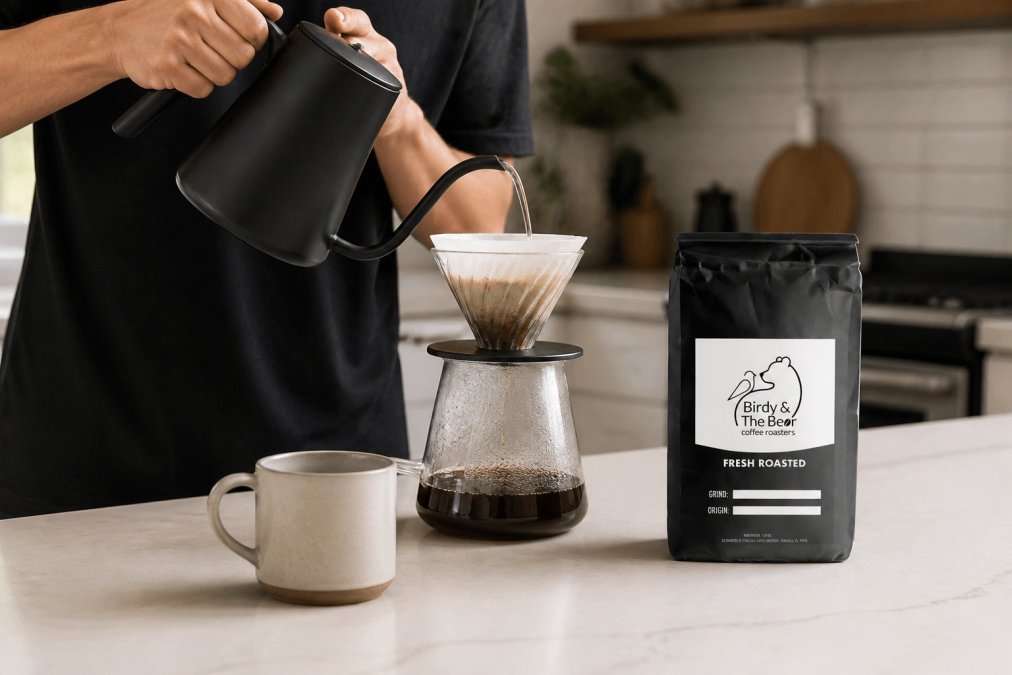
For a med-light roast like Ethiopia Natural, a pour-over at 200°F with a 1:16 water-to-coffee ratio will open up those milk chocolate and fruity notes. French press works well for medium roasts with more body; Brazil Santos is excellent this way.
Dialing In Water-to-Coffee Ratio and Extraction
Water-to-coffee ratio is the most underrated brewing variable. The standard starting point is 1:15 to 1:17 by weight. For a single origin with delicate flavor notes, starting at 1:16 and adjusting from there is reliable.
Water quality matters too. Dissolved solids in your water affect extraction; the target range for specialty coffee brewing is typically 75-150 ppm total dissolved solids. Barista Hustle water chemistry guide for coffee brewing
A practical dialing-in checklist:
- Weigh your coffee and water, don't estimate
- Use a gooseneck kettle for pour-over control
- Start at 200°F (93°C) water temperature for medium roasts
- Bloom the grounds for 30-45 seconds before the main pour
- Taste before adding milk, single origins are designed to be tasted straight
- Adjust grind size first if the cup is too sour (coarser) or too bitter (finer)
How to Identify Specialty Coffee Quality Before You Buy
Specialty-grade coffee is not just a marketing term, it has a defined meaning: beans that score 80+ on a professional cupping scale. When a roaster publishes cupping scores and tasting notes, that's a signal they're operating at specialty level.
Tasting notes on the bag are a prediction, not a guarantee. They describe what trained cuppers tasted under controlled conditions. Your cup will vary based on your brew method, water, and equipment.
Storage, Freshness, and Degassing After Roast
Fresh-roasted coffee releases CO₂ for 24-72 hours after roasting. This is why espresso shots can be inconsistent if you pull them the day the beans arrive. Rest espresso beans for 5-10 days after roast before pulling shots. For filter coffee, 3-5 days post-roast is typically enough.
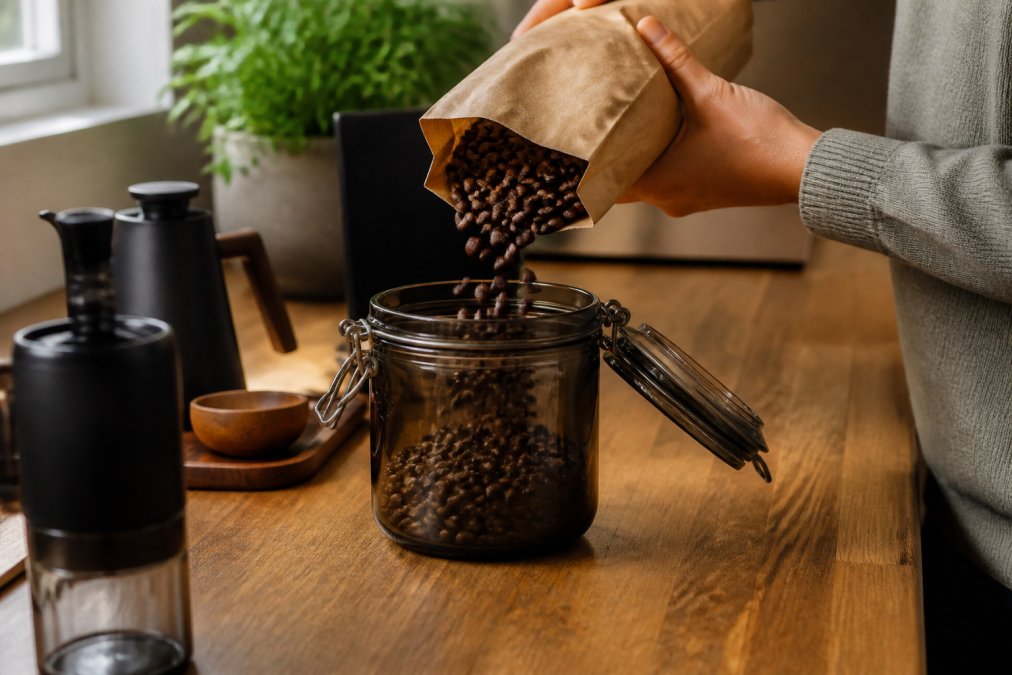
Store your beans in an airtight container away from light and heat. Whole beans stay fresh significantly longer than pre-ground, which is why whole bean is always the better choice if you have a grinder.
Which Should You Choose? A Decision Framework
The single origin vs coffee blends decision comes down to four questions:
Your situation |
Best choice |
|---|---|
You want the same great cup every morning |
Blend |
You enjoy exploring flavor and don't mind variation |
Single origin |
You primarily brew espresso and want consistency |
Blend |
You brew pour-over or AeroPress and want nuance |
Single origin |
You're new to specialty coffee |
Blend to start, then explore single origins |
You care deeply about farm-level traceability |
Single origin |
You want versatility across multiple brew methods |
Omni-roast single origin or medium-roast blend |
Not sure where to start? The Single Origin Favorites Sample Pack from Birdy & The Bear Coffee ($24.99) includes six 2-oz packs, Brazil Santos, Colombia, Costa Rica, Ethiopia, Honduras, and Tanzania, each from a named grower with full processing details. It's the most practical way to taste the range of what single origin coffee can be.
If you already know you want a blend, the Breakfast Blend (smooth, South American, medium roast) is the approachable entry point. The 6 Bean Blend is the right call for espresso drinkers who want a dark, consistent house shot.
Most serious home brewers end up with both: a reliable blend for weekday mornings, a rotating single origin for weekends when there's time to dial it in properly.
Frequently Asked Questions
Is single origin coffee better than a blend?
Neither is objectively better — they serve different purposes. Single origin coffee highlights the distinct terroir, acidity, and tasting notes of one geographic region, making it ideal for curious drinkers who want complexity and nuance. Blends prioritize consistency and balance, smoothing out seasonal variation across harvests. If you want to explore flavor profiles from specific farms, single origin wins. If you want a reliable, well-rounded cup every morning, a well-crafted blend delivers that dependably.
Should I choose single origin or a blend for espresso brewing?
Blends have traditionally dominated espresso because batch roasting multiple origins allows roasters to balance sweetness, body, and bitterness for a stable shot. Single origin espresso can produce spectacular results — bright acidity, distinct fruit notes — but it demands tighter control over extraction variables like grind size, water temperature, and water-to-coffee ratio. If you're newer to espresso, a blend like the 6 Bean Blend gives you more margin for error. Experienced home baristas often prefer single origin espresso for the challenge and reward.
What are the primary flavor profile differences between single origin and blends?
Single origin coffees express the specific character of their source: a washed process Ethiopian from the Sidama zone delivers fruity, caramel notes, while a wet-hulled Bali Blue from Kintamani reads as dark chocolate and molasses. These flavors reflect altitude, varietal, soil type, and processing method. Blends layer multiple origins to create a composite flavor — typically smoother, with less pronounced acidity and a more predictable mouthfeel. The tradeoff is that blends sacrifice the singular nuance you get from a high-altitude single farm coffee.
How does sourcing impact the quality of single origin coffee?
Sourcing is where quality is either built or lost. Single origin coffee traced to specific smallholder farmers or cooperatives — ideally through direct trade relationships — gives roasters visibility into harvest season, processing method, and varietal selection. That transparency lets them roast to the bean's actual profile rather than guessing. When you see details like altitude, soil type, and the grower's name on a bag, those aren't just marketing; they're signals that the supply chain is short enough to preserve quality from the coffee cherry to your cup.
How long does coffee stay fresh after roasting, and does shipping affect that?
Freshly roasted coffee reaches peak flavor between 5 and 14 days post-roast, after CO2 from the roasting process has degassed sufficiently. For espresso, most baristas prefer to wait at least 7-10 days before pulling shots. When a roaster fires your order only after it's placed and ships within 24-48 hours, the beans typically arrive well within that peak window — even accounting for 3-5 days of transit. Store them in an airtight container away from light and heat, and whole beans will hold quality for 3-4 weeks.
What is the most popular single origin coffee?
Ethiopian coffees consistently rank among the most sought-after single origins in specialty coffee circles, largely because Ethiopia is considered the birthplace of arabica and its indigenous heirloom cultivars produce distinctive fruity and floral notes that no other region replicates. Colombian single origins are also widely popular for their approachable acidity and chocolate-fruit balance. Popularity shifts with each harvest season, which is part of what makes single origin coffee exciting — the best cup this year may come from a different farm than last year's.