

Table of Contents
- What Makes Coffee Ethically Sourced?
- How to Identify Ethical Coffee Labels
- Fair Trade Coffee Brands vs. Direct Trade: Key Differences
- Direct Trade Coffee Benefits for Farmers and Drinkers
- Best Ethically Sourced Coffee Beans to Buy Online
- Brewing Sustainable Coffee at Home: Method Matters
- How to Buy Ethically Sourced Coffee Beans Online
- Conclusion
Last Updated: August 26, 2026
Most coffee bags claim to be "ethically sourced," but that phrase means almost nothing without proof. At Birdy & The Bear Coffee, we've built our entire sourcing model around one principle: if you can't trace the bean back to the farmer, the claim is marketing, not accountability. This guide breaks down what ethical sourcing means in practice, how to spot the real thing online, and which coffees are worth your money in 2026.
What Makes Coffee Ethically Sourced?
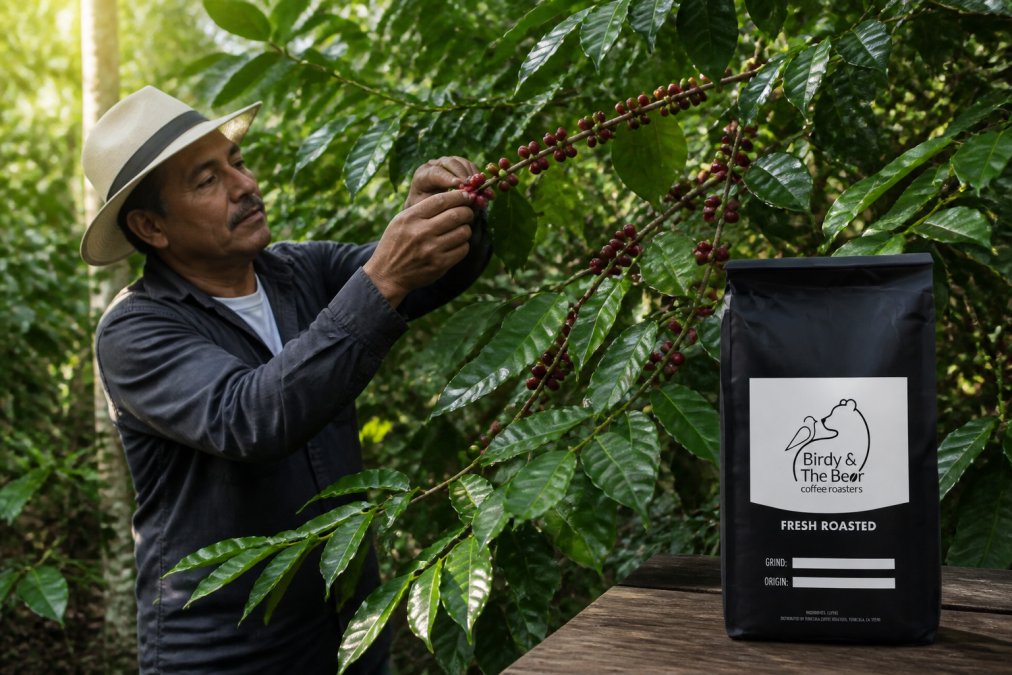
Ethically sourced coffee is coffee produced through supply chains that prioritize fair compensation for farmers, environmentally responsible farming practices, and verifiable transparency from farm to roaster. According to Fairtrade America's overview of coffee farmer economics, small-scale farmers often receive only a fraction of the retail price, even when their beans are labeled premium. The gap between what consumers pay and what growers earn is where ethical sourcing either proves itself or falls apart.
Organic Farming and Shade-Grown Practices
Organic farming means growing without synthetic pesticides or chemical fertilizers, protecting soil health and farming communities. Shade-grown cultivation takes this further: coffee plants grown under a canopy of trees support biodiversity, reduce soil erosion, and create habitat for migratory birds. These agroforestry systems also sequester carbon. Organic certification from a legitimate third-party body signals that a farm is operating responsibly.
Supply Chain Transparency and Traceability
Traceability is the backbone of any credible ethical sourcing claim. A transparent supply chain tells you the region, the cooperative or individual grower, the processing method, and ideally the altitude and soil conditions. Single-origin coffees make traceability easier to verify than blends because the sourcing chain is shorter and more specific. When a roaster lists the grower's name, the cooperative, and the processing method, that's a sign they've done the work.
How to Identify Ethical Coffee Labels
Spotting genuinely ethical coffee online comes down to reading past front-of-bag marketing and checking the details roasters provide about their sourcing relationships.
Third-Party Certifications Worth Trusting
The most credible options:
- USDA Organic: Certifies pesticide-free, non-toxic growing practices under the National Organic Program.
- Fair Trade Certified (Fair Trade USA): Guarantees minimum price floors for farmers and community development premiums paid to cooperatives.
- Rainforest Alliance: Focuses on environmental stewardship, biodiversity, and water conservation with social standards.
- Direct Trade: A sourcing model where roasters buy directly from farmers, often at prices significantly above fair trade minimums.
According to USDA National Organic Program overview, certified organic products must meet strict federal standards verified by accredited third-party certifiers.
Transparency Scorecards: What to Look For Online
When shopping online, ask these questions:
- Does the product page name the specific farm, cooperative, or region?
- Is the processing method listed (washed, natural, honey, wet-hulled)?
- Does the roaster explain how they price their relationships with farmers?
- Are certifications linked to verifiable third-party bodies?
- Can you find the roast date or a freshness commitment?
The more boxes a roaster checks, the more seriously they take supply chain accountability.
Fair Trade Coffee Brands vs. Direct Trade: Key Differences
Fair trade is a formal, third-party certified system. Fair Trade USA sets minimum price floors that cooperatives receive regardless of market fluctuations and mandates a community development premium for schools, healthcare, and infrastructure. The system is auditable and standardized. The limitation is that fair trade minimums are a floor, not a ceiling, and often below what exceptional beans are worth.
Direct trade is a relationship model, not a certification. Roasters buy directly from farmers or cooperatives, cutting out intermediaries and often paying significantly more than fair trade minimums. The tradeoff: there's no independent verification. You're trusting the roaster's word that their direct relationships are equitable.
The best sourcing combines elements of both: the price accountability of fair trade structures with the relationship depth and premium pricing of direct trade. Roasters who publish specific pricing data for their farmer relationships are taking this most seriously.
Direct Trade Coffee Benefits for Farmers and Drinkers
Direct trade removes intermediaries from the supply chain, allowing more of the retail price to flow back to growers. For cooperatives, this can translate into greater economic equity, investment in processing infrastructure, and the ability to invest in quality improvements that command higher prices in future seasons.
For drinkers, direct trade typically means fresher, more traceable, higher-quality coffee. Roasters who travel to origin and build multi-year relationships tend to source better beans and understand the roast profile that suits each lot.
Best Ethically Sourced Coffee Beans to Buy Online
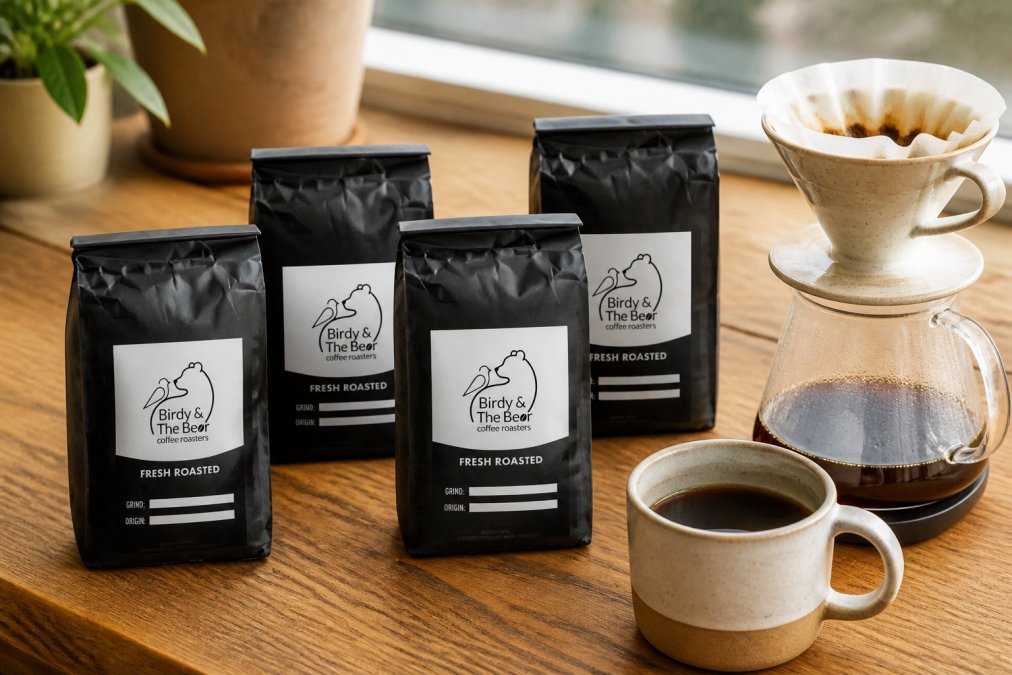
Birdy & The Bear Coffee roasts every order after it's placed, so the coffee you receive hasn't been sitting in a warehouse. Every bean is sourced from responsible partnerships with growers, and product pages list specific growers, regions, processing methods, and tasting profiles.
Single Origin Favorites Sample Pack ($24.99)
The Single Origin Favorites Sample Pack gives you six 2oz packs covering Brazil, Colombia, Costa Rica, Ethiopia, Honduras, and Tanzania. Each origin comes with full grower and processing information.

The Colombia comes from smallholder farmers in Medellín, grown on volcanic loam at 1,300-1,500 meters and fully washed in solar dryers. The Ethiopia Natural is from the Sidama zone, processed full natural and dried on raised beds using indigenous heirloom cultivars. The Tanzania is grown by small cooperative farmers in the Mbeya region at altitudes up to 1,900 meters.
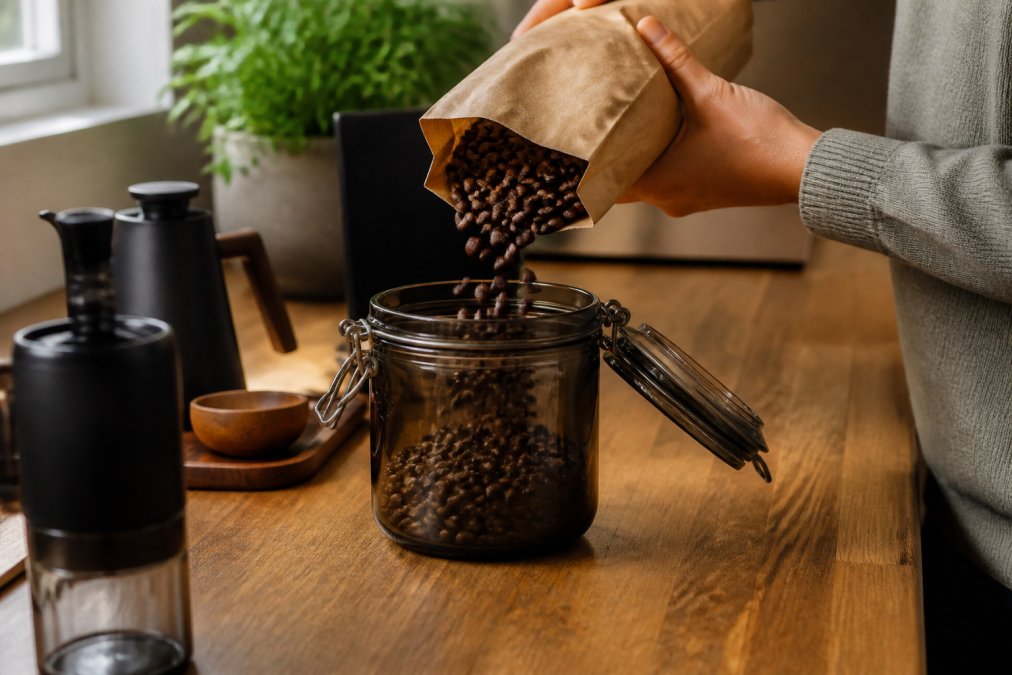
Best for: Anyone new to single-origin coffee who wants to explore diverse flavor profiles before committing to a full bag.
Origin |
Roast |
Tasting Profile |
Process |
|---|---|---|---|
Brazil Santos |
Medium |
Cocoa, smooth, elegant |
Pulped natural, sun dried |
Colombia |
Medium |
Dried orange, berry, chocolate |
Fully washed, solar dried |
Costa Rica |
Medium |
Sweet apple, raisin, honey |
Eco-pulped, sun dried |
Med-light |
Milk chocolate, fruity, caramel |
Full natural, raised beds |
|
Honduras |
Medium-dark |
Caramel, spice, brown sugar |
Fully washed, sun dried |
Tanzania |
Medium-light |
Pear, floral, jasmine, strawberry |
Fully washed, raised beds |
Best Sellers Sample Pack ($24.99)
The Best Sellers Sample Pack offers six 2oz packs mixing house blends with single origins: the 6Bean Blend (dark roast, built for espresso), the Cowboy Blend (dark and medium combined), the Breakfast Blend (smooth, South American base), plus Peru, Mexico, and Bali single origins.
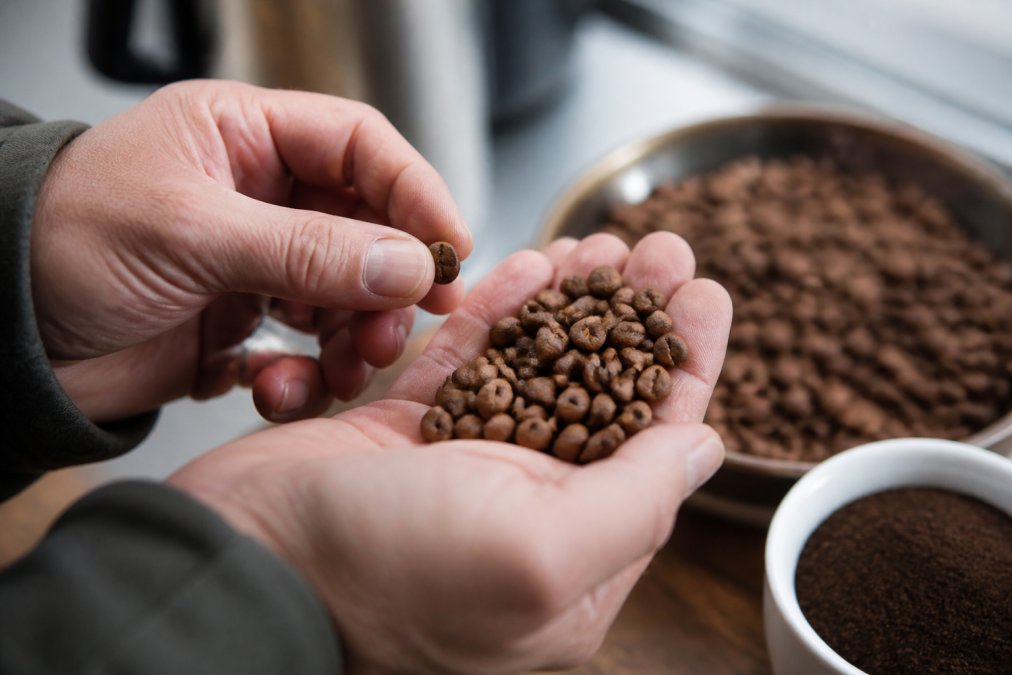
The Peru is sourced from Cooperativa Agricola de Servicios Norandino in the Piura and Amazonas regions. The Bali comes from smallholder farmers in Kintamani, hand-picked and wet-hulled. The Mexico originates from growers in Chiapas and Oaxaca, fully washed and sun dried.
Best for: Drinkers who want to compare blends against single origins, or anyone who drinks espresso and wants to find their ideal roast level.
Individual Single Origins: Colombia, Ethiopia, Kenya, and More ($18.99 each)
Kenya, sourced from Othaya in Nyeri County at 1,700-1,890 meters, fully washed and dried on raised beds. Tasting notes of bright acidity, orange, lemon, and floral. Grown using SL28 and SL34 varieties, among the most sought-after arabica beans in specialty coffee.
Ethiopia Natural, Sidama zone, indigenous heirloom cultivars, full natural process. Tasting profile of milk chocolate, fruity, and caramel at 1,700-1900 meters on nitisols soil.
Sumatra, sourced through the Koperasi Baitul Qiradh Baburrayyan cooperative in Aceh, processed using Giling Basah (wet-hulling). Cupping notes of dark chocolate, dried fruit, and earthy with a syrupy body.
Brewing Sustainable Coffee at Home: Method Matters
The brewing method you choose has a real environmental footprint. Pour-over methods (V60, Chemex, Kalita Wave) use compostable paper filters. Reusable metal filters eliminate that waste entirely. French press and AeroPress with metal filters are among the lowest-waste brewing options. Espresso machines use no paper but consume more energy.
According to the EPA's guidance on reducing household waste, composting organic materials including coffee grounds and paper filters significantly reduces landfill contribution. Whole bean coffee stays fresh longer than pre-ground, meaning less waste from stale coffee.
The roast-to-order model matters too. When coffee is roasted only after you order, you receive beans at peak freshness rather than commodity inventory sitting in a distribution center for weeks.
Post-Purchase Waste Management
Coffee grounds are a rich source of nitrogen and can go directly into a compost bin or be worked into garden soil. Look for roasters using kraft paper bags with degassing valves rather than non-recyclable multi-layer foil pouches. Pods and single-serve capsules are the highest-waste format in home coffee brewing.
How to Buy Ethically Sourced Coffee Beans Online
Use this checklist before placing an order:
- Does the product page name the specific farm, cooperative, or growing region?
- Is the processing method listed (washed, natural, honey, wet-hulled)?
- Does the roaster roast to order, or do they ship from pre-roasted inventory?
- Are third-party certifications (USDA Organic, Fair Trade USA, Rainforest Alliance) listed and verifiable?
- Does the roaster explain their pricing relationships with farmers?
- Is a roast date or freshness commitment provided?
- Are whole bean options available?
Direct-to-consumer subscription models from specialty roasters offer flexibility: you can customize frequency, adjust quantities, and pause delivery. This reduces the risk of accumulating more coffee than you can drink fresh.
A common mistake when buying single-origin coffee online for the first time is ordering based on roast level alone. A medium roast from Ethiopia and a medium roast from Sumatra taste nothing alike. The origin, variety, and processing method determine the flavor profile far more than the roast designation. For espresso drinkers: freshly roasted beans need 5-10 days of degassing before they pull cleanly. Roast-to-order coffee is ideal because you know exactly when the coffee was roasted.
Choosing where to buy ethically sourced coffee online is harder than it should be, mostly because the industry is full of vague claims and no verification. Birdy & The Bear Coffee makes the sourcing information visible on every product page: the grower, the region, the processing method, and the altitude. Every order is roasted after it's placed, so you receive coffee at peak freshness. If you're ready to make the switch to coffee you can actually trace, Shop Now and start with one of the sample packs. Six origins for $24.99 is the lowest-risk way to find the single-origin profile that becomes your daily cup.
Frequently Asked Questions
Q: What is the difference between Fair Trade and direct trade coffee?
A: Fair trade coffee involves third-party certification bodies that set minimum price floors and social standards, ensuring smallholder cooperatives receive a baseline payment above commodity market rates. Direct trade skips that intermediary entirely: the roaster negotiates directly with the grower, often paying above fair trade minimums and building multi-season relationships. Direct trade can deliver higher prices to farmers and greater roast profile control, but it relies on the roaster's own transparency rather than independent verification.
Q: How can you tell if coffee is ethically sourced?
A: Look for three signals. First, check for third-party certifications such as Fair Trade USA, Rainforest Alliance, or USDA Organic on the bag. Second, read the product page for grower names, cooperative details, altitude, and processing method — specific data points indicate genuine supply chain transparency. Third, check whether the roaster publishes direct trade agreements or sourcing reports. Vague phrases like 'responsibly sourced' without supporting detail are a red flag; named farms and cooperatives are a good sign.
Q: Is organic coffee always ethically sourced?
A: No. USDA Organic certification confirms pesticide-free, non-toxic growing practices and supports soil health and biodiversity, but it says nothing about whether farmers received a living wage or fair payment. A coffee can be certified organic while still passing through exploitative supply chains. For full ethical confidence, look for organic certification combined with fair trade or direct trade sourcing documentation that addresses economic equity and social impact alongside environmental stewardship.
Q: What is the most ethical way to buy coffee?
A: Buying directly from a roaster that sources through direct trade or verified fair trade relationships is the most reliable approach. Direct-to-consumer online purchases cut out multiple middlemen, meaning more of your purchase price reaches the grower. Prioritize roasters who name their growers, publish sourcing details, roast to order for freshness, and offer whole bean options to reduce packaging waste. Sample packs are a practical first step — they let you evaluate single-origin profiles before committing to a full bag.
Q: Does the brewing method affect the environmental impact of my coffee?
A: Yes, meaningfully. A French press or pour-over produces no single-use pods or paper capsule waste, making them lower-impact choices. Pod-based systems generate significant plastic and aluminum waste per cup. If you use a drip machine, reusable metal filters eliminate paper filter waste. Buying whole bean coffee and grinding at home also extends freshness without extra packaging. Combined with compostable or recyclable coffee bag disposal, these small choices add up to a noticeably smaller carbon footprint over time.