

Table of Contents
- What Makes a Great Coffee Delivery Service for Professionals
- Fresh Roasted Coffee Delivered to Your Door: What Professionals Need
- Bean-to-Cup vs. Single-Serve: Choosing Your Delivery Format
- Coffee Subscription Frequency Guide for Busy Professionals
- How to Store Coffee Beans for Maximum Freshness Between Deliveries
- Sustainability and Waste Management in Coffee Delivery
- Remote Work and Hybrid Workforce Solutions
- Frequently Asked Questions
Last Updated: September 1, 2026
What Makes a Great Coffee Delivery Service for Professionals
The difference between a mediocre coffee subscription and an exceptional one comes down to freshness, consistency, and convenience. For professionals juggling remote work, hybrid schedules, and the constant demand for peak performance, a reliable coffee delivery service isn't a luxury, it's infrastructure for your workday.
The best services share three non-negotiables: beans roasted immediately after your order ships, flexible subscription frequency that adapts to your actual consumption, and transparent sourcing so you know exactly where your coffee originates. Beyond that, what separates good from great depends on your brewing setup, how much experimentation you want, and whether you prioritize single-origin exploration or dependable blends.
At Birdy & The Bear Coffee, we've built our service around these fundamentals. Every order is roasted only after you place it, ensuring you receive coffee at peak freshness rather than sitting in inventory for weeks. We partner with growers worldwide to source beans responsibly, and we offer whole bean, and ground to match however you brew.
Below, we'll walk you through how to evaluate coffee delivery services, what format works best for your workflow, and how to maximize freshness between deliveries.
Fresh Roasted Coffee Delivered to Your Door: What Professionals Need
When coffee arrives at your door within days of roasting, the difference in your cup is unmistakable. Fresh roasted coffee delivered to your door means you're getting beans at their optimal window, typically 3-14 days post-roast, when the beans have degassed enough for proper extraction but haven't begun losing their volatile aromatics (peer-reviewed research).
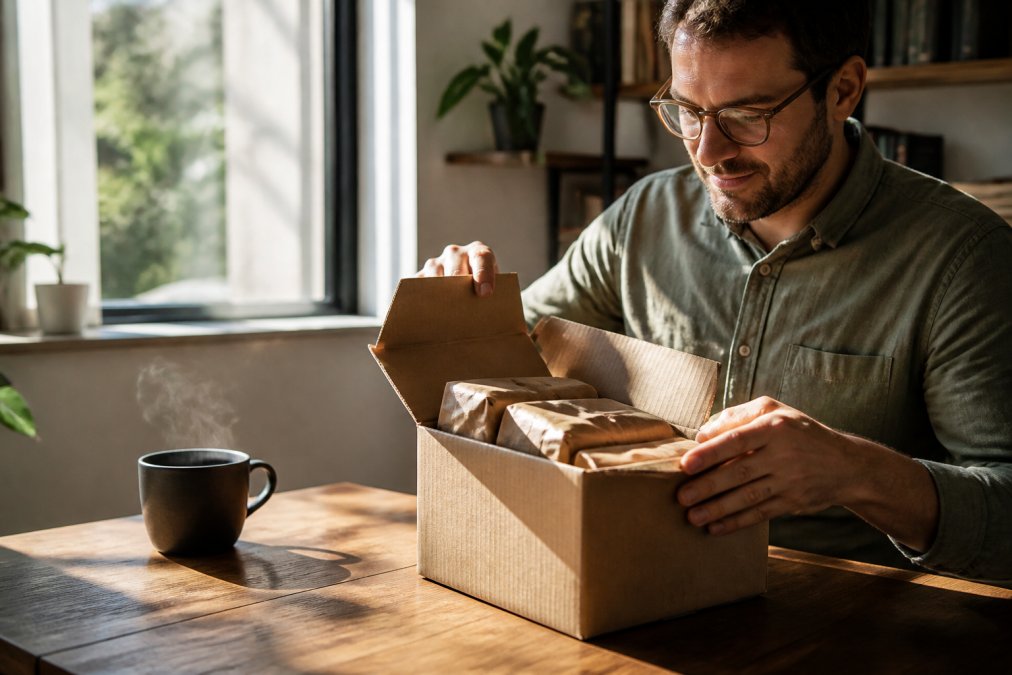
Professional in home office opening a cardboard coffee delivery package at their desk, morning sunlight streaming through window, fresh coffee cup steaming nearby
Most commercial coffee services roast in bulk, warehouse inventory, and ship when orders come in. This adds 1-2 weeks to the timeline before beans reach you (sca.coffee). By then, you're drinking coffee that's already past its peak. A roast-to-order model eliminates that lag entirely.
For busy professionals, this matters more than it might seem. Your morning ritual sets the tone for focus and productivity. A flat, stale cup doesn't fuel your workday the way a vibrant, complex one does. When you're managing back-to-back meetings, client calls, or deep work sessions, you deserve coffee that actually tastes like something.
Birdy & The Bear Coffee roasts every order only after you place it, meaning your beans ship within 24-48 hours of roasting. You'll receive them while they're still in that sweet spot where flavor is at its brightest. This approach does require slightly longer delivery times than some competitors, typically 3-5 business days depending on your location, but the trade-off is worth it: coffee that performs.
Delivery Model |
Typical Age at Arrival |
Flavor Profile |
Best For |
|---|---|---|---|
Roast-to-order |
3-7 days post-roast |
Bright, complex, full aromatics |
Professionals who prioritize peak freshness |
Warehouse/bulk roast |
2-4 weeks post-roast |
Flattened, muted, less aromatic |
Budget-conscious buyers accepting compromise |
Local specialty roaster |
1-3 days post-roast |
Brightest flavor, highest cost |
Coffee enthusiasts with nearby roasters |
The reality: if you're serious about your coffee, freshness is non-negotiable. Roast-to-order services cost slightly more, but they deliver what you're actually paying for.
Bean-to-Cup vs. Single-Serve: Choosing Your Delivery Format
Your brewing method dictates which format makes sense for your workflow. This choice affects not just convenience, but flavor consistency and cost per cup.
Whole bean gives you maximum control and stays fresher longest after roasting. Grind immediately before brewing, and you capture every nuance of the roast. For professionals with a grinder at home or in the office, this is the gold standard. Whole bean also stores better, the intact bean protects the interior from oxidation.
Ground coffee trades some freshness for pure convenience. Once ground, coffee begins losing aromatics immediately. But if you're pressed for time in the morning, pre-ground eliminates a step. Quality matters here: a good grind distribution means more consistent extraction, while a poor grind creates bitter or under-extracted shots.
For remote workers managing their own schedule, whole bean makes sense. You have time to grind fresh. For hybrid workers rushing between meetings, ground saves precious minutes.
Birdy & The Bear Coffee offers various formats. Our Breakfast Blend + ($18.99) comes in whole bean and ground, letting you choose based on your morning routine. For professionals who want to test multiple origins without committing to full bags, our Single Origin Favorites Sample Pack ($24.99) ships six 2-ounce samples, so you can discover what resonates with your palate.


Coffee Subscription Frequency Guide for Busy Professionals
The wrong subscription frequency creates waste. Too frequent, and you're drowning in unopened bags. Too infrequent, and you're stuck drinking stale coffee while waiting for the next shipment.
The math depends on three variables: how much you brew daily, whether you share consumption with others, and how long your beans stay fresh at home.
A single professional brewing one cup daily (roughly 0.3 ounces of beans per cup) consumes about 10 ounces per week (sca.coffee). A 12-ounce bag lasts roughly 10 days before flavor begins degrading noticeably. For solo drinkers, biweekly delivery makes sense, you finish one bag as the next arrives, maintaining that fresh window.
Households with multiple coffee drinkers consume faster. Two people brewing daily can go through 20+ ounces per week. Weekly delivery becomes necessary to avoid stale coffee.
Remote workers have flexibility that office workers don't. You control your brewing schedule. If you travel frequently or take vacation weeks, you can pause or adjust your subscription without waste. This is critical: any service that locks you into rigid schedules or charges cancellation fees is working against your actual needs.
For professionals experimenting with different origins, monthly subscription frequency lets you explore systematically. One month you try a Peru single-origin, the next month a Brazilian natural process, then an Ethiopian heirloom. This pace prevents decision fatigue while building your palate over time.
Birdy & The Bear Coffee lets you set your own delivery schedule, weekly, biweekly, monthly, or custom intervals. You adjust it anytime through your account. No contracts, no penalties. If you're traveling for work or taking a break, pause your subscription and resume when you're ready.
How to Store Coffee Beans for Maximum Freshness Between Deliveries
Once your fresh roasted coffee arrives, storage becomes critical. Oxygen, light, heat, and humidity are coffee's enemies. Protect against all four, and your beans stay vibrant for weeks. Neglect storage, and they fade in days.
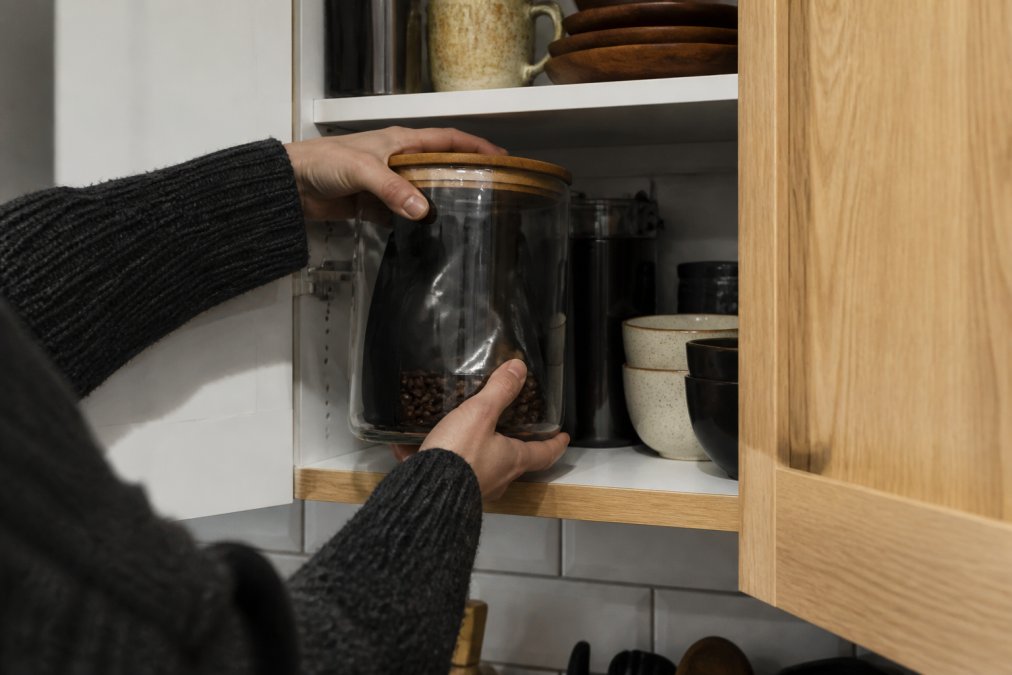
Hands placing opened coffee bag into an opaque airtight glass container in a kitchen cabinet, away from sunlight and heat sources, organized storage space visible
Airtight containers are non-negotiable. Oxygen causes oxidation, which flattens flavor. Transfer beans from their original bag into a container with a tight seal, glass jars with rubber gaskets work well, as do opaque airtight canisters. If you keep beans in the original bag, roll it down tightly and use a clip to seal it.
Darkness matters more than most people realize. Light exposure, especially sunlight, degrades the oils in coffee beans. Store containers in a cabinet or pantry, not on open shelves or near a window. Opaque containers protect better than clear glass.
Cool temperatures slow degradation. Room temperature (around 70°F) is acceptable. Avoid storing near heat sources: not above the stove, not in direct sunlight, not in a warm garage. Refrigerators and freezers are debated, some professionals swear by freezing beans in vacuum-sealed bags, others argue condensation damages them. If you freeze, use airtight bags and thaw completely before opening.
Low humidity prevents moisture from seeping in. A kitchen cabinet works better than a bathroom or basement. If your climate is very humid, consider a small dehumidifier in your storage space.
The window for peak freshness is roughly 2-4 weeks post-roast, depending on storage conditions. After that, beans are still drinkable but increasingly flat. This is why subscription frequency matters: you want beans arriving before the previous batch reaches the tail end of its window.
For professionals with limited storage space, buying smaller quantities more frequently (like biweekly instead of monthly) ensures you're always brewing fresher coffee. It's a trade-off between convenience and quality, but given how much time you spend on work, investing in better coffee is investing in better focus.
Sustainability and Waste Management in Coffee Delivery
Subscription coffee services generate packaging waste. The ethical choice is minimizing it without sacrificing freshness.
Look for services using compostable or recyclable packaging. Paper bags with compostable linings are standard now, they break down in commercial composting facilities. Some services offer reusable containers, though the logistics of shipping them back can be complex. The most transparent services disclose their packaging materials and composting partnerships.
Pod-based systems present a harder problem. Single-serve pods are convenient, but most end up in landfills. Some manufacturers now offer recyclable or compostable pods, and a few have started pod take-back programs. If you use pods, research whether your preferred brand participates in recycling initiatives.
At the sourcing level, sustainability matters differently. Coffee farming is water-intensive and often involves pesticide use. Services sourcing from certified sustainable or organic growers reduce environmental impact, though certification itself varies in rigor. Birdy & The Bear Coffee partners with growers worldwide using environmentally friendly processing methods, natural/dry processing and wet mill washed techniques that are friendly to rainforests and local water systems.
For professionals concerned about impact, asking questions about sourcing and packaging isn't pedantic, it's due diligence. Services that answer transparently are ones you can trust.
Remote Work and Hybrid Workforce Solutions
The shift to remote and hybrid work changed how professionals consume coffee. No longer are you drinking whatever the office break room provides. You're building your own coffee ritual at home, on your schedule.
This flexibility is an advantage, but it requires intentionality. Without the structure of an office environment, your morning routine becomes something you design. For many professionals, that ritual, grinding beans, brewing, that first sip, is the boundary between sleep and work mode.
A reliable coffee delivery service becomes part of that infrastructure. Knowing fresh beans will arrive on schedule removes decision friction. You're not running to the grocery store wondering if they have your preferred roast. You're not settling for stale coffee because that's what's available. You control the experience.
For hybrid workers splitting time between home and office, whole bean or ground coffee works better than pods, you can brew at home before heading to the office, or bring a bag to keep in your desk. Single-serve pods are better for office environments where multiple people brew throughout the day.
Remote teams that want to build culture around coffee have another option: sending team members the same coffee subscription. A shared experience, everyone brewing the same origin, tasting the same notes, creates connection across distributed locations. Some services offer corporate gifting or team subscriptions at discounts. It's a small gesture that signals your company values quality and pays attention to how people actually work.
The underlying principle: coffee delivery for professionals isn't about status or snobbery. It's about removing friction from something that matters to your daily performance. Better coffee means better focus, better mood, better work. When you're managing complex projects, client relationships, or creative work, that edge compounds.
Choosing the right coffee delivery service means matching your actual workflow, not chasing trends. For professionals prioritizing peak freshness, Birdy & The Bear Coffee delivers beans roasted only after you order, ensuring you receive coffee at its brightest, most complex moment. We offer whole bean, ground, and pod formats, flexible subscription frequency you can adjust anytime, and transparent sourcing from growers worldwide. Whether you're brewing a single morning cup or fueling a household of coffee drinkers, shop our collection and experience how fresh roasted coffee actually tastes.
Frequently Asked Questions
Q: What should professionals look for in a coffee delivery service?
A: Professionals should prioritize delivery frequency flexibility, freshness guarantees, and bean variety. Look for services that roast after you order to ensure peak flavor, offer no-contract subscriptions you can pause anytime, and provide both whole bean and ground options. Responsibly sourced beans and transparent sourcing information matter too.
Q: How does fresh roasted coffee delivered to your door compare to local roasters?
A: Fresh roasted coffee delivered to door services roast immediately after you order, locking in peak flavor during transit. Local roasters offer convenience, but delivery services often provide access to specialty single-origin profiles and blends. The key difference is timing: delivery services guarantee freshness at arrival, while local stock may have been roasted days or weeks prior, even if they roast in-house.
Q: How flexible are coffee subscription services if I need to pause my order?
A: Most quality coffee delivery services offer flexible subscriptions with no contracts. You can typically pause, skip, or adjust delivery frequency through your account without penalties. Always check the specific terms before subscribing, but flexibility is standard in the specialty coffee delivery market.
Q: What's the best coffee subscription frequency for daily drinkers?
A: Daily coffee drinkers typically need a new delivery every 2-4 weeks, depending on consumption and brewing method. A 12-ounce bag yields roughly 12-15 cups. If you drink 1-2 cups daily, bi-weekly deliveries work well. Monthly deliveries suit lighter drinkers. The advantage of subscription services is adjusting frequency anytime, so start with monthly and adjust based on how quickly you finish each bag.
This article was written using GrandRanker