

Table of Contents
- What Makes Roasted to Order Coffee Different
- Why Freshness Matters: The Science of Coffee Flavor
- Roasted to Order vs. Grocery Store Coffee: A Real Comparison
- How to Tell If Coffee Beans Are Fresh
- How Long Does Coffee Stay Fresh After Roasting
- Best Way to Store Coffee Beans
- The Resting Period Paradox and Brewing Optimization
- Is Roasted to Order Worth It? Pros and Cons
Last Updated: August 28, 2026
What Makes Roasted to Order Coffee Different
Roasted to order coffee is roasted only after you place your order, not weeks or months before it ships to you. Most coffee you buy at grocery stores was roasted days, weeks, or even months ago, slowly losing its most volatile and flavorful compounds during storage and shelf time.
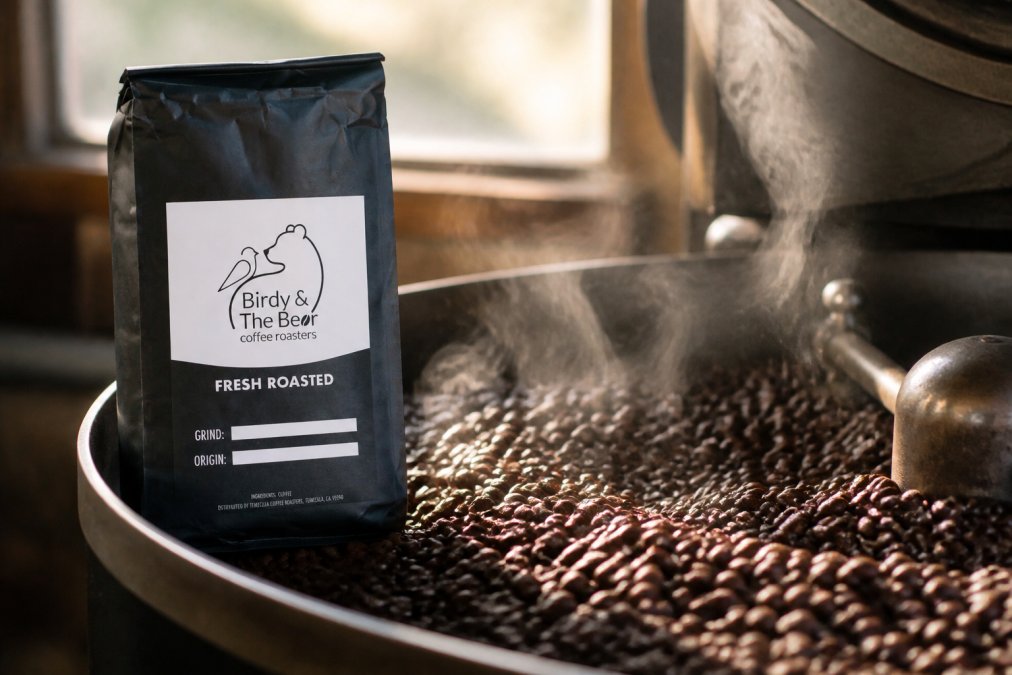
At Birdy & The Bear Coffee, we roast every order only after it's placed. Your coffee starts its journey at peak freshness, typically arriving within days of roasting, when the flavor profile is sharpest, the aroma most complex, and the sensory experience most vibrant.
The difference isn't subtle. Fresh roasted coffee has brightness, clarity, and complexity that fades quickly. Stale coffee tastes flat, bitter, or muddy. If your home-brewed coffee doesn't taste like specialty coffee shop espresso, the freshness gap is usually the culprit.
Why Freshness Matters: The Science of Coffee Flavor
Coffee flavor is built on volatile compounds, aromatic molecules that give coffee its complexity, sweetness, and brightness. The moment a coffee bean is roasted, these compounds begin to escape. Once degassing slows down, oxidation takes over. Oxygen in the air reacts with the bean's oils and remaining volatile compounds, breaking them down into stale, bitter, or flat-tasting byproducts.
A roasted to order coffee arrives at your door while it still has most of its original volatile compounds intact. Compare that to grocery store coffee, which has been oxidizing for weeks. Fresh roasted coffee tastes sharper, more nuanced, and more complex. You taste the origin's acidity, sweetness, and specific tasting notes. Stale coffee tastes generic, often just bitter or sour.
Oxidation and Volatile Compounds
Oxidation is the enemy of coffee freshness. When oxygen contacts the oils and compounds in roasted beans, a chemical reaction degrades flavor. This happens faster in ground coffee than in whole beans, but it happens to both.
The volatile compounds responsible for coffee's best flavors, the ones that make a single origin taste bright, floral, or fruity, are the first to go. Within two weeks of roasting, you've lost a significant portion of these compounds (peer-reviewed research). By four weeks, most specialty coffee is noticeably past its peak.
This is why roasted to order coffee tastes so different. You're brewing beans that still have most of their original aromatic profile intact. The acidity tastes clean instead of sour. The sweetness is actual sweetness, not just the absence of bitterness.
The Degassing Process and Peak Flavor Window
Immediately after roasting, coffee beans are saturated with carbon dioxide (peer-reviewed research). This gas needs to escape, a process that takes roughly 24 to 72 hours depending on the roast level. The peak flavor window for most coffees is after degassing has mostly completed, but before oxidation has progressed too far, typically 5 to 14 days after roasting (peer-reviewed research).
Roasted to order coffee arrives right in the middle of this window. When you open a bag that was roasted five days ago, you're brewing at peak flavor. Grocery store coffee has already passed that window by weeks.
Roasted to Order vs. Grocery Store Coffee: A Real Comparison
The practical differences are substantial. Here's how they stack up:
| Aspect | Roasted to Order | Grocery Store Coffee |
|---|---|---|
| Roast date | Days old | Weeks or months old |
| Volatile compounds | 80-90% retained | 20-40% retained |
| Flavor clarity | Bright, complex, nuanced | Flat, bitter, or muddy |
| Aroma | Strong, specific | Faint or stale |
| Oxidation level | Minimal | Advanced |
| Consistency between brews | High | Variable |
| Price per pound | $16-22 | $8-12 |
Roasted to order coffee costs more because freshness requires on-demand roasting, faster shipping, and no bulk storage. But if you care about how your coffee tastes, the cost difference is worth it.
How to Tell If Coffee Beans Are Fresh
Freshness has visible and sensory signals. Learning to recognize them helps you avoid stale coffee.
Look at the roast date. This is the single most reliable indicator. If the bag doesn't have a roast date printed on it, don't buy it. Anything roasted more than 30 days ago is past its peak. Anything more than 60 days old is noticeably stale.
Check the color. Freshly roasted beans have a matte or slightly oily surface with uniform, rich color. Stale beans look dull, faded, or chalky. The surface loses its luster.
Smell the beans. Fresh roasted coffee has a strong, complex aroma with specific notes like chocolate, nuts, fruit, or flowers. Stale coffee smells flat, musty, or like cardboard.
Listen when you open the bag. Fresh roasted coffee still releases some CO2. If you hear a slight hiss or feel gentle pressure when opening, the coffee is still degassing and is fresh.
Brew a test cup. Fresh roasted coffee brews with clarity and specific characteristics. Stale coffee tastes flat, one-dimensional, or bitter.
How Long Does Coffee Stay Fresh After Roasting
Days 1-3 after roasting: Still degassing. Good results, though flavor might taste slightly muted compared to peak.
Days 5-14 after roasting: Peak flavor window. Degassing mostly complete, oxidation hasn't progressed far, and the flavor profile is most complex and vibrant. This is when roasted to order coffee typically arrives.
Days 15-30 after roasting: Still good, but brightness is fading. Sweetness becomes less pronounced. Still significantly better than grocery store coffee.
Days 30-60 after roasting: Noticeably stale. Flavor is flat, aroma is faint. This is where most grocery store coffee sits.
After 60 days: Past the point of being enjoyable for specialty brewing.
Ground coffee oxidizes much faster than whole beans because increased surface area exposes more of the bean to air.
Best Way to Store Coffee Beans
Storage conditions determine how fast your coffee stales. The enemies are air, light, heat, and moisture.
Use an airtight container. Oxygen accelerates oxidation. A sealed container, whether the original bag or a dedicated coffee canister, slows the process significantly. Avoid clear containers. Opaque is better.
Keep it cool and dark. Heat accelerates oxidation. Light degrades flavor compounds. Store your coffee in a cabinet or pantry, not on the counter next to the window. Room temperature is fine.
Avoid the freezer. Freezing coffee introduces moisture when you thaw it, which speeds up staleness. Room temperature in an airtight container beats frozen coffee.
Buy whole beans, not ground. Ground coffee stales much faster. If you must buy ground coffee, use it within a week. Whole beans stay fresh up to a month before grinding.
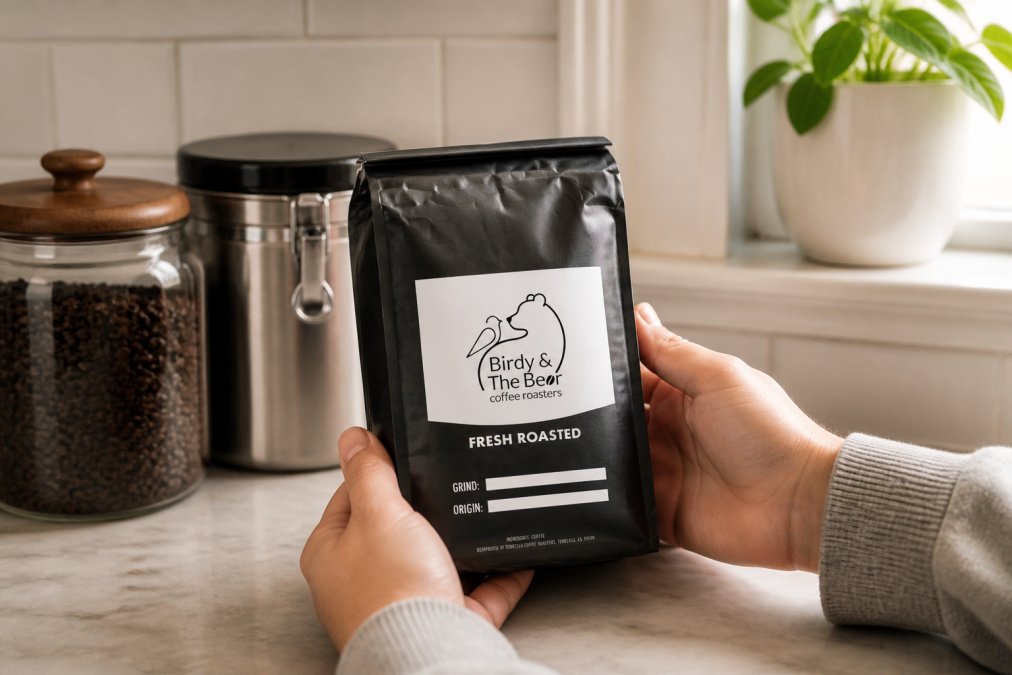
Grind right before brewing. Grind only what you're about to brew. Don't grind a week's worth at once.
The Resting Period Paradox and Brewing Optimization
Modern roasting techniques and lighter roasts degas faster than they used to. Many coffees are ready to brew 24 hours after roasting. Waiting longer isn't always better, if you wait too long, oxidation starts winning the battle against freshness.
For roasted to order coffee arriving at your door 5-7 days after roasting, degassing is already complete. You can brew immediately.
If you're brewing espresso, freshness matters even more. Espresso is more sensitive to oxidation than filter coffee. Fresh roasted coffee pulls better shots, produces thicker crema, and tastes cleaner.
Is Roasted to Order Worth It? Pros and Cons
Pros:
Flavor is the obvious win. Roasted to order coffee tastes noticeably better with sharper brightness, complexity, and sweetness.
Consistency matters. Fresh coffee brews more predictably. Your espresso shots pull consistently. Your filter coffee tastes the same week to week.
You're supporting responsible sourcing. Most roasted to order roasters work directly with growers and pay premium prices for quality beans. Birdy & The Bear Coffee partners with growers worldwide, meaning your money goes to farmers being paid fairly.
Convenience is real if you use a subscription service. Coffee arrives on schedule. You never run out.
Cons:
Cost is substantial. Roasted to order coffee often costs double grocery store coffee.
Shipping takes time. Even fast shipping means your coffee is 3-5 days old when it arrives.
You need to use it. Roasted to order coffee is only better if you brew it while fresh. If you let it sit for three months, you've wasted the money.
Subscription flexibility matters. Look for services that let you pause, skip, or change frequency easily.
The honest answer: roasted to order coffee is better if you care about flavor and will actually use it while fresh. If you're indifferent to how your coffee tastes, or if you drink coffee so slowly that a bag sits for months, roasted to order isn't for you.
But if you've tasted truly fresh roasted coffee, you understand why people pay for it. That flavor is worth the extra cost.
Birdy & The Bear Coffee delivers roasted to order coffee directly to your door, arriving at peak freshness. Every order is roasted only after you place it, ensuring the beans still have their full flavor profile intact. Our single origins and blends are sourced responsibly from growers worldwide. Shop our collection now and experience what truly fresh roasted coffee tastes like. Our Whiskey Barrel Aged blend, for example, is a single origin from Guatemala aged 30 days in a bourbon barrel and then roasted to order, a complex, smooth coffee that showcases exactly why freshness matters.

Frequently Asked Questions
Does roasted to order coffee taste different than store-bought?
Yes. Roasted to order coffee tastes noticeably different because it arrives at peak flavor, before oxidation degrades the volatile compounds that create aroma and complexity. Store-bought coffee has already lost acidity, sweetness, and nuanced tasting notes during weeks on shelves. The sensory experience is sharper: brighter acidity, cleaner body, and more pronounced origin characteristics. Most drinkers detect the difference immediately in their first cup.
How long does roasted to order coffee stay fresh?
Roasted to order coffee peaks between 5-14 days after roasting, depending on roast level and bean quality. Light roasts peak faster (5-7 days); darker roasts extend to 14+ days. After 30 days, even properly stored beans lose significant flavor complexity. The roast date matters more than the purchase date, knowing when your beans were roasted lets you time your brew for maximum extraction and sensory impact.
What are the signs of stale coffee beans?
Stale coffee beans show flat aroma when you open the bag, lack of visible oils on the surface, and a muted, bitter taste with no sweetness or acidity. The body feels thin and the extraction becomes inconsistent across your brew. If your coffee tastes one-dimensional or ashy, oxidation has degraded the volatile compounds. Fresh beans smell vibrant and complex; stale beans smell flat and hollow.
How should I store roasted to order coffee to keep it fresh longer?
Store whole beans in an airtight, opaque container away from heat, light, and moisture. Vacuum-sealed bags with one-way valves work well for the first 2-3 weeks. Keep beans at room temperature (never refrigerate or freeze unless storing for months). Ground coffee loses freshness faster, grind just before brewing. Proper storage slows oxidation and preserves the flavor profile, aroma, and tasting notes that make roasted to order coffee worth buying.
This article was written using GrandRanker