

Table of Contents
- Why Freshly Roasted Coffee Delivers Superior Flavor and Aroma
- How to Tell If Coffee Beans Are Fresh
- Coffee Bean Shelf Life: Understanding the Peak Flavor Window
- Best Way to Store Coffee Beans for Maximum Freshness
- Health Benefits and Antioxidant Content in Fresh Beans
- Brewing Adjustments for Fresh vs. Aged Beans
- Small-Batch Roasting vs. Mass Production: Why It Matters
- Conclusion
- Frequently Asked Questions
Last Updated: September 2, 2026
Why Freshly Roasted Coffee Delivers Superior Flavor and Aroma
Freshly roasted coffee tastes dramatically different from beans that have been sitting on a shelf for weeks or months. The difference comes down to chemistry: coffee beans release volatile compounds and gases immediately after roasting, and those compounds degrade over time. When you buy freshly roasted coffee, you're capturing those compounds at their peak.
The moment coffee is roasted, a process called off-gassing begins. Carbon dioxide and other volatile compounds escape from the beans, carrying with them the nuanced flavors and complex aromas that make specialty coffee worth drinking. Within the first few days after roasting, the bean's flavor profile is at its most vibrant. After two to three weeks, much of that sensory experience has already faded.
At Birdy & The Bear Coffee, we roast every order only after you place it. This approach ensures that when your beans arrive at your door, they're still in their peak flavor window. You're not drinking coffee that's been sitting in a warehouse or on a retail shelf losing its character. You're getting coffee at the moment it tastes its absolute best.
The aroma alone tells the story. Fresh beans release a rich, complex fragrance. Older beans smell flat and dull by comparison. If you've ever wondered why specialty coffee shops smell so incredible, it's because they're roasting regularly and selling quickly. That's the experience we're recreating for your home.
How to Tell If Coffee Beans Are Fresh
The most reliable way to identify fresh coffee is to check the roast date on the bag. A legitimate roaster prints the roast date clearly, not the best-by date or the packaging date, but the actual day the beans were roasted. If you can't find a roast date, that's your first red flag. Many mass-produced coffees hide this information intentionally because the beans are old.
Look for beans roasted within the past 5-10 days for the most vibrant flavor. Beans roasted 2-3 weeks ago are still good, but they've already lost some of their aromatic complexity. Beyond four weeks, the sensory experience degrades noticeably.
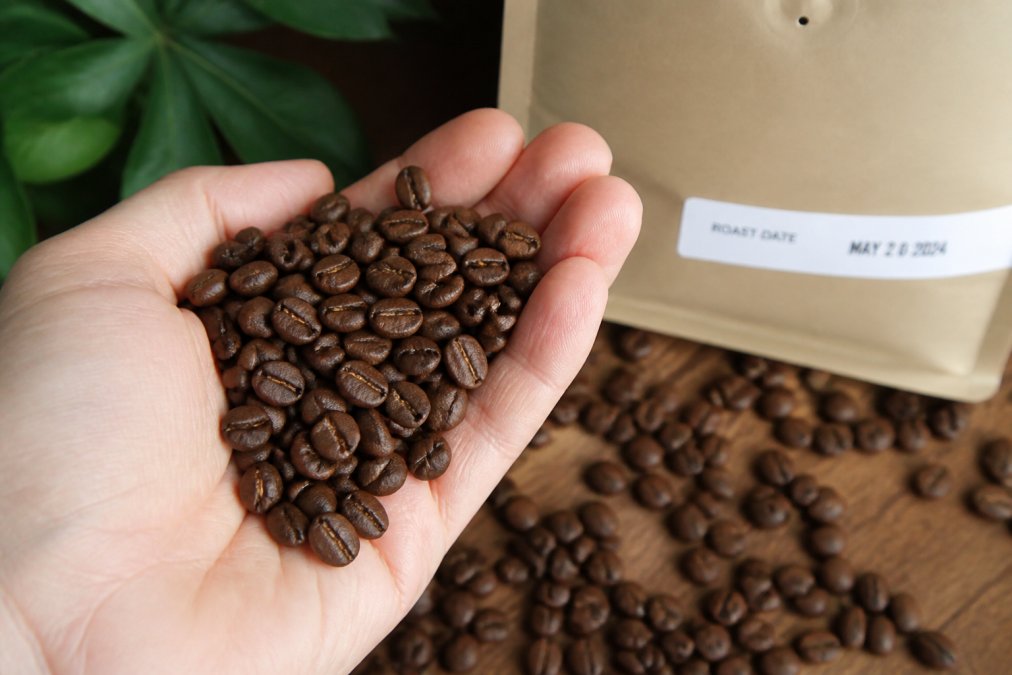
Reading Roast Dates and Understanding the Bloom
The roast date is your most important tool for assessing freshness. Print dates, best-by dates, and packaging dates are not the same thing. The roast date is the only number that tells you when the beans actually came off the roaster.
When you open a bag of freshly roasted beans, you might notice a slight haze or frost on the surface. That's the bloom, a visible layer of carbon dioxide and oils that have risen to the surface during off-gassing. The presence of a visible bloom is a strong indicator that the beans are fresh. As beans age and off-gassing slows, the bloom fades.
Some roasters use a roast code instead of a printed date. This is a common tactic used to obscure how old the beans actually are. If a roaster won't tell you the roast date clearly, they're likely selling older stock. Transparency about freshness is a sign of quality.
Visual and Sensory Indicators of Freshness
Beyond the roast date, you can assess freshness through simple observation. Fresh beans have a rich, uniform color. The exact shade depends on the roast level, light roasts are lighter brown, dark roasts are nearly black, but the color should be consistent and vibrant, not dull or faded.
When you open the bag, the aroma should be immediate and complex. Fresh beans release a strong fragrance. If the smell is faint or one-dimensional, the beans have likely lost much of their volatile compound profile. A weak aroma is a strong indicator of age.
Grind a few beans and smell the grounds immediately. Fresh grounds smell bright and aromatic. Older grounds smell flat and dusty. This simple test takes five seconds and tells you a lot about what you're about to brew.
Coffee Bean Shelf Life: Understanding the Peak Flavor Window
Coffee beans don't go bad in the way that food spoils, but they do stale. The peak flavor window for freshly roasted coffee is roughly 5-30 days after roasting, with the absolute best flavor happening in days 5-14. This is the period when volatile compounds are still present in meaningful quantities, but the beans have also completed their initial off-gassing phase.
Days 1-4 after roasting are tricky. The beans are still releasing carbon dioxide aggressively. If you try to brew during this window, especially with espresso, you'll get uneven extraction and inconsistent shots. The CO2 interferes with water's ability to extract flavors evenly. This is why many specialty roasters recommend waiting 3-5 days before brewing.
Days 5-30 are the sweet spot. The beans have degassed enough to brew consistently, but they still retain most of their aromatic compounds and nuanced flavor profile. After 30 days, the sensory experience begins to decline noticeably. After 8-12 weeks, the beans are stale, they'll still make drinkable coffee, but the complexity and brightness have faded significantly.
The timeline varies slightly depending on roast level. Light roasts tend to stay fresh slightly longer because they have a denser bean structure. Dark roasts off-gas more aggressively and their flavor profile changes more noticeably over time. But the general window of 5-30 days applies across all roast levels.
Best Way to Store Coffee Beans for Maximum Freshness
The enemy of freshness is oxygen, light, heat, and humidity. Store your beans in an airtight container, away from direct sunlight, in a cool place. The ideal storage temperature is 50-70°F (ncausa.org). Room temperature is fine, but avoid areas near heat sources like ovens, radiators, or sunny windows.
Many coffee enthusiasts make the mistake of storing beans in the refrigerator or freezer. This creates condensation problems. When you remove cold beans to room temperature, moisture condenses on the surface. That moisture accelerates oxidation and degrades flavor. The freezer can work if you're storing beans long-term and you remove exactly what you need without opening the container repeatedly, but for beans you'll use within a month, room-temperature storage in an airtight container is superior.
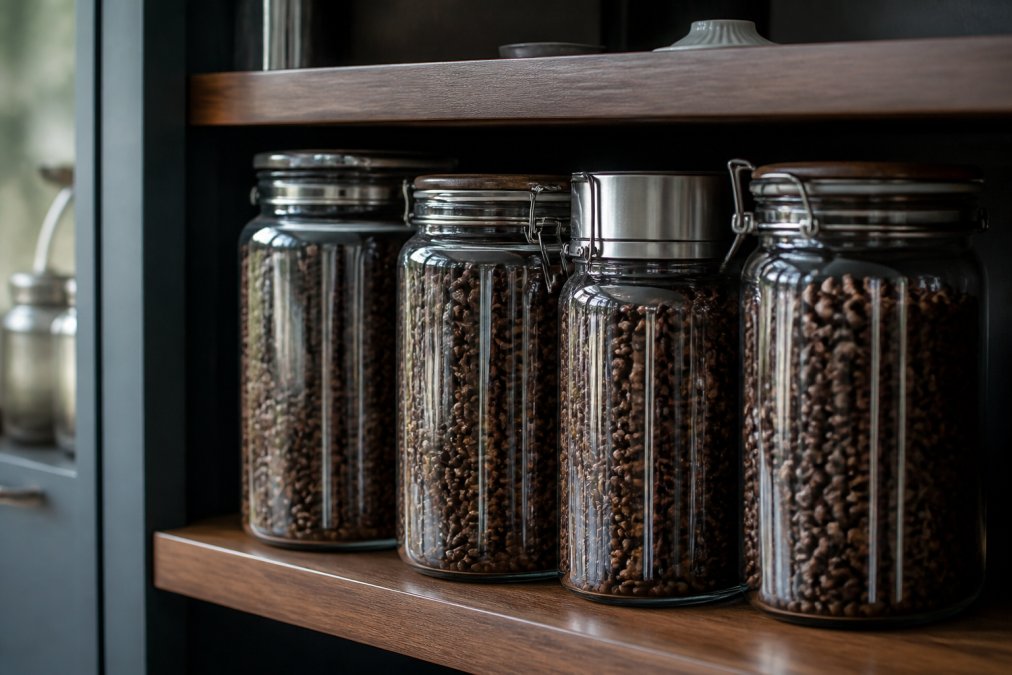
The original bag your beans arrive in is actually one of the best storage options. Quality roasters use bags with one-way valves that allow CO2 to escape while preventing oxygen from entering. Keep the bag sealed between uses. If you do transfer beans to another container, use glass or opaque plastic, never clear containers that let light in.
Buy only what you'll use within 4-6 weeks. Buying in bulk might seem economical, but stale coffee is a waste of money. Freshly roasted coffee is worth more than aged coffee, and the freshness window is short. Frequent, smaller orders ensure you're always brewing at peak flavor.
Health Benefits and Antioxidant Content in Fresh Beans
Coffee contains chlorogenic acid and caffeic acid, two polyphenols with antioxidant properties (peer-reviewed research). These compounds are present in fresh beans and degrade over time through oxidation. Freshly roasted beans contain higher concentrations of these antioxidants than older beans.
The roasting process itself affects antioxidant content. Light roasts retain more chlorogenic acid because the shorter roast time preserves more of this heat-sensitive compound. Dark roasts have lower chlorogenic acid but develop other beneficial compounds during the longer roast. The point is that freshness matters for the nutritional profile, not just the flavor.
The antioxidant benefits of coffee are modest compared to other foods, but they're real. If you're drinking coffee for its health properties, which many people do, freshness ensures you're getting the maximum benefit. Stale beans have degraded antioxidant content alongside their degraded flavor.
Brewing Adjustments for Fresh vs. Aged Beans
Fresh beans and aged beans require different brewing approaches. The difference comes down to off-gassing and extraction dynamics.
Beans in days 1-4 after roasting release CO2 aggressively. This gas interferes with water's ability to extract flavors evenly. With espresso, aggressive off-gassing causes channeling, water finds paths of least resistance through the puck, leading to uneven extraction and sour shots. With pour-over or French press, the effect is less dramatic but still noticeable.
The solution is simple: wait 3-5 days before brewing, or adjust your technique. If you're brewing fresh beans on day 2, use a slightly coarser grind and a longer contact time to compensate for the CO2 interference. With espresso, some baristas use a slightly higher dose or a longer pull to account for uneven extraction.
Beans aged 5+ weeks have completed off-gassing and are stable. Standard brewing parameters work perfectly. The beans extract evenly and predictably.
A practical adjustment: if you receive beans from Birdy & The Bear Coffee and want to brew immediately, use a French press or immersion brew method. These methods are more forgiving of aggressive off-gassing than espresso or pour-over. By day 5-7, the beans are ready for any brewing method you prefer.
Small-Batch Roasting vs. Mass Production: Why It Matters
Small-batch roasting and mass production create fundamentally different products. Small-batch roasters roast in smaller quantities, which allows precise temperature control and attention to the roasting curve. They can adjust the roast profile based on the specific bean characteristics, moisture content, density, origin, altitude, processing method.
Mass production prioritizes consistency and volume. Large roasters use industrial equipment that processes hundreds of pounds per batch. The roasting curve is standardized. There's less room for adjusting to the nuances of individual bean lots. The result is a product that's consistent but often less nuanced.
The freshness advantage of small-batch roasting is significant. Small roasters typically roast more frequently in smaller quantities, which means inventory moves faster. Beans spend less time in storage. Mass producers often roast large batches and store them in warehouses for weeks or months before distribution.
When you buy from a small-batch roaster like Birdy & The Bear Coffee, you're getting beans roasted specifically for your order, in small quantities. This approach maximizes freshness and allows for more precise flavor profiles. The roaster has direct control over the roasting curve, the cooling process, and the timing of roasting relative to shipment.
The environmental impact is worth considering too. Small-batch roasting requires more frequent roasting runs, which uses more energy per pound than large-batch roasting. However, local or regional small-batch roasting eliminates long-distance shipping. The trade-off between roasting efficiency and shipping distance is worth understanding. Beans roasted locally and shipped regionally have a smaller environmental footprint than beans roasted in bulk far away and shipped across the country.
Conclusion
Fresh coffee tastes better, brews more consistently, and delivers more of the sensory complexity that makes specialty coffee worth drinking. The peak flavor window is short, roughly 5-30 days after roasting, and freshness degrades noticeably after that. Learning to identify fresh beans, understand roast dates, and store them properly transforms your home coffee experience.
When you order from Birdy & The Bear Coffee, every bag is roasted only after your order arrives. That commitment to freshness means your beans arrive at peak flavor, ready to deliver the complexity and brightness that make the ritual of home brewing worthwhile. Our curated single origins and expertly crafted blends are designed to showcase what freshness makes possible. Start with the Single Origin Favorites Sample Pack to explore how roast date and freshness impact flavor across different origins, or try our Best Sellers Sample Pack to discover which profiles resonate with your palate. Shop Now and experience coffee at its peak.


Frequently Asked Questions
Is freshly roasted coffee actually better than store-bought?
Yes. Freshly roasted coffee retains volatile compounds and nuanced flavor profiles that degrade over time through oxidation. Store-bought beans often sit on shelves for weeks or months, losing the bright aroma and complex tasting notes that emerge in the first two weeks after roasting. When you buy freshly roasted coffee roasted within days of brewing, you experience the full sensory experience the roaster intended.
How long does coffee stay fresh after roasting?
Coffee reaches peak flavor between 5 to 30 days after roasting. During the first few days, off-gassing releases carbon dioxide and the bloom develops. After 30 days, the beans begin staling as oxidation breaks down chlorogenic acid and other compounds responsible for brightness and complexity. Whole beans stay fresher longer than ground coffee, which oxidizes rapidly once the bean integrity is compromised.
Does freshly roasted coffee have more antioxidants?
Freshly roasted beans contain higher levels of caffeic acid and other antioxidants compared to older beans. These compounds degrade through oxidation and staling over time. While coffee retains some antioxidant content even after several months, beans roasted within the past month deliver the maximum antioxidant benefit per cup, contributing to the health benefits associated with fresh coffee consumption.
What should I look for to identify fake freshness labels?
Verify the roast date is printed on the bag, not just a vague 'roasted fresh' claim. Legitimate roasters like Birdy & The Bear Coffee print specific dates and often roast only after your order is placed. Be skeptical of beans without a roast date, those labeled 'roasted within 30 days' without a specific date, or retailers who can't explain their sourcing and roasting timeline. Responsible roasters provide full transparency on when and where beans were roasted.
This article was written using GrandRanker